

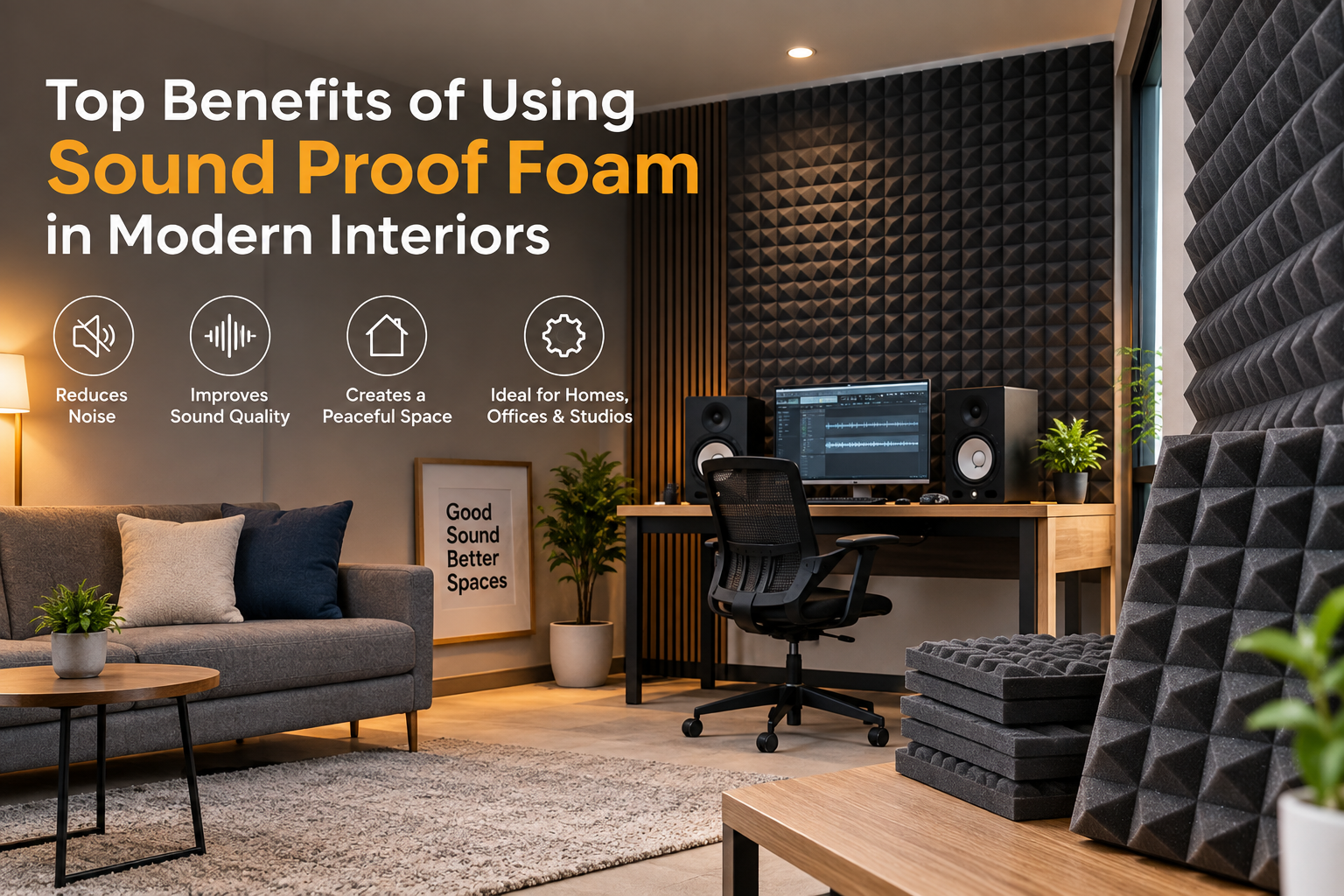
Modern interiors are designed to offer comfort, functionality, and a sense of calm. Whether it is a home, office, recording studio, conference room, or entertainment space, sound plays an important role in shaping the experience. Unwanted noise, echoes, and poor acoustic control can make even a beautifully designed interior feel uncomfortable.
As people increasingly prioritize peaceful living and productive workspaces, acoustic solutions have become an important part of interior planning. One material that is frequently considered for managing sound within rooms is acoustic foam, commonly referred to as sound proof foam.
From reducing unwanted echoes to improving sound clarity, the right acoustic foam can support a more comfortable indoor environment. However, understanding its benefits and limitations is essential before selecting a solution for a particular space.
In this article, we explore the top benefits of using sound proof foam in modern interiors and how it can contribute to better acoustic experiences.
1. Helps Reduce Unwanted Echoes and Reverberation
One of the main benefits of using
is its ability to help manage sound reflections within a room. Hard surfaces such as concrete walls, glass, tiles, and wooden flooring can reflect sound, creating echoes and excessive reverberation.
When multiple sound waves reflect from surfaces, conversations may become less clear, music can sound unbalanced, and the overall acoustic environment may feel unpleasant.
Acoustic foam is designed with porous or specialized structures that absorb some sound energy, particularly within certain frequency ranges. When appropriately selected and installed, it can help reduce reflections and improve the way sound behaves inside a room.
For example, a home office with bare walls may produce noticeable echoes during online meetings. Strategic placement of acoustic foam can help manage these reflections, creating a more controlled environment for communication.
It is important to understand that acoustic foam does not eliminate every sound or guarantee complete soundproofing. Its primary purpose is generally to improve room acoustics through sound absorption.
2. Improves Speech Clarity in Offices and Meeting Rooms
Clear communication is essential in modern workplaces. Open-plan offices, meeting rooms, training areas, and conference spaces often experience sound-related challenges because of hard surfaces and multiple conversations.
When sound reflects excessively, it can become difficult for people to understand one another. This may affect online meetings, presentations, interviews, and everyday collaboration.
Using appropriately positioned
can help reduce certain reflections and improve speech intelligibility within a room.
For instance, a meeting room with acoustic treatment on selected walls or ceiling areas may provide a more controlled listening environment than a room with entirely reflective surfaces.
The effectiveness of the solution depends on factors such as room size, ceiling height, background noise, furniture, and the type of acoustic material used.
Interior designers and acoustic specialists can evaluate these factors to determine where treatment may be most useful.
3. Creates a More Comfortable Home Environment
Home interiors are no longer designed only for appearance. Many homeowners want spaces that support relaxation, remote working, entertainment, and quality time with family.
Noise from televisions, conversations, household appliances, and room reflections can affect comfort, especially in homes with open layouts or limited acoustic treatment.
Acoustic foam can be considered as part of an interior strategy to manage sound reflections in selected areas. It may be useful in home theaters, music rooms, gaming spaces, and home offices where sound quality and comfort are important.
For example, a dedicated entertainment room with reflective walls may produce unwanted echoes during movie playback. Carefully designed acoustic treatment can help improve the listening experience by reducing excessive reflections.
However, homeowners should distinguish between sound absorption and sound isolation. Foam panels generally help manage sound within a room; they do not automatically prevent noise from entering or leaving the space.
For stronger sound isolation, construction-based solutions such as improved wall assemblies, sealing gaps, and appropriate insulation may be required.
4. Supports Better Audio Quality in Studios and Creative Spaces
Recording studios, podcast rooms, music practice areas, and content creation spaces require careful attention to sound quality. Uncontrolled reflections can influence recordings and make it harder to achieve consistent audio results.
Acoustic foam is commonly used in some recording and production environments to help control reflections. Depending on its design and placement, it can contribute to a more balanced acoustic setting.
For podcasters, clear vocal recordings are particularly important. Excessive room reflections can make speech sound distant or less defined. Acoustic treatment, combined with suitable microphone positioning and recording techniques, may help improve the final result.
Musicians and audio professionals should consider the room’s complete acoustic requirements rather than relying on foam alone. Low-frequency problems, room modes, and sound isolation may require additional solutions.
A professional acoustic assessment can help determine the appropriate combination of materials for the intended application.
5. Offers Flexible Design Options for Modern Interiors
Acoustic materials are not necessarily limited to traditional studio environments. Today, interior projects often seek solutions that balance performance with visual appeal.
Sound absorption products are available in different shapes, thicknesses, textures, and finishes. Depending on the product, designers may be able to integrate acoustic elements into creative wall arrangements or selected architectural features.
Using
as part of a considered interior design can help address acoustic concerns while maintaining the room’s overall visual direction.
For example, a creative workspace might incorporate geometric acoustic panels that complement its furniture and color palette. A media room could use coordinated acoustic elements to support its visual theme.
Not every foam product offers the same design flexibility, so buyers should confirm available sizes, finishes, installation requirements, and technical specifications with the supplier.
The objective should be to create an interior that feels comfortable and visually cohesive rather than adding acoustic materials without a clear plan.
6. Can Support Productivity in Workspaces
Noise management has become increasingly important as more people work from home, attend virtual meetings, and share office environments.
Background conversations, sound reflections, and distractions can make it harder to maintain concentration. Although acoustic foam cannot remove every external noise source, it may help improve the acoustic conditions inside a room.
In a home office, strategically placed acoustic treatment can help control reflections and make conversations more intelligible. In a commercial workspace, acoustic planning may support more comfortable communication and collaboration.
The best results usually come from considering the entire acoustic environment. Furniture, carpets, curtains, ceiling treatments, room layout, and background noise levels can all influence the experience.
A practical approach involves identifying the main sound-related problem before choosing a product. This helps ensure that the selected material addresses the actual requirement rather than simply adding foam to the room.
7. Provides a Practical Option for Targeted Acoustic Treatment
One advantage of acoustic foam is that it can be used for targeted treatment in specific areas. Instead of redesigning an entire interior, property owners may choose to focus on rooms or surfaces where sound reflections are most noticeable.
This can be useful in small studios, home offices, gaming rooms, rehearsal areas, and selected commercial spaces.
The suitability of foam depends on the room’s acoustic objectives, available installation space, and product specifications. A small room may need a different treatment approach from a large open-plan office or professional recording studio.
Before purchasing, it is helpful to assess:
- The room’s dimensions and surface materials.
- The primary source of unwanted sound or reflections.
- The intended use of the room.
- The absorption characteristics of the selected product.
- Installation and maintenance requirements.
By focusing on the specific acoustic challenge, buyers can make more informed decisions and avoid unnecessary expenditure.
8. Supports More Thoughtful Interior Planning
Acoustic performance is becoming a consideration in many contemporary interior projects. Architects, designers, and property owners are increasingly looking beyond aesthetics to understand how spaces sound and feel.
A well-planned interior considers lighting, ventilation, furniture, materials, movement, and acoustics together. This approach helps create spaces that are not only visually attractive but also functional for their intended users.
Using
may be one component of a broader acoustic strategy. For example, a designer planning a collaborative office might combine sound-absorbing wall elements with soft furnishings and a suitable layout.
Similarly, a residential project may consider acoustic treatment in a home theater or dedicated music room.
The important point is that acoustic materials should be selected according to the specific requirements of the project. There is no universal product that works equally well in every interior.
9. Helps Create a More Enjoyable Entertainment Experience
Home entertainment spaces have become popular in modern residential design. Dedicated areas for movies, gaming, music, and streaming can benefit from thoughtful acoustic planning.
When a room contains many hard surfaces, sound reflections may interfere with listening comfort. Acoustic treatment can help manage certain reflections, allowing users to experience more controlled room acoustics.
For example, a home theater may benefit from a combination of acoustic panels, suitable furnishings, and careful speaker placement. Foam can be considered where its performance characteristics align with the room’s needs.
However, homeowners should avoid assuming that adding foam to every wall will automatically improve audio quality. Excessive or poorly positioned absorption may affect the room’s sound balance.
A considered approach, supported by product specifications and acoustic guidance, is more appropriate than relying solely on appearance.
10. Encourages Long-Term Acoustic Consideration
Choosing acoustic solutions during the interior planning stage can help property owners address sound-related challenges before they become recurring problems.
When designing a new office, studio, or home entertainment room, considering acoustics alongside other design decisions can improve the overall planning process.
The selection of
should take into account the room’s current needs and possible future use. A workspace may later become a meeting room, or a spare bedroom may be converted into a recording area.
Understanding the product’s performance, installation requirements, and limitations helps support more practical purchasing decisions.
For larger or technically demanding projects, consulting an acoustic professional can help identify the right combination of absorption and sound isolation measures.
How to Choose the Right Acoustic Foam for Your Interior
Before purchasing acoustic foam, it is important to understand the specific requirements of your room. Product appearance alone does not determine acoustic performance.
Consider the following factors:
Room purpose: A podcast room, home office, music studio, and commercial meeting room may require different acoustic approaches.
Material performance: Review the product’s absorption characteristics, dimensions, thickness, and technical information.
Installation: Check whether the product is suitable for the intended wall or ceiling surface and whether professional installation is recommended.
Room coverage: Determine which surfaces require treatment based on the room’s acoustic behavior rather than covering every available area.
Safety and durability: Confirm applicable safety information, product quality, and maintenance requirements before installation.
These considerations can help ensure that your acoustic treatment is aligned with the actual needs of your interior.
Conclusion
Sound plays a significant role in how people experience modern interiors. From residential spaces to professional studios and commercial offices, effective acoustic planning can contribute to improved comfort, communication, and listening experiences.
can help manage certain sound reflections and support targeted acoustic treatment when selected and installed appropriately. Its benefits include improved speech clarity, reduced reverberation, design flexibility, and support for specialized spaces such as recording rooms and home theaters.
However, acoustic foam should not be confused with complete soundproofing. Managing external noise transmission often requires additional construction-based solutions and professional assessment.
By understanding the difference between sound absorption and sound isolation, evaluating product specifications, and considering the room’s intended purpose, homeowners and businesses can make informed acoustic decisions.