

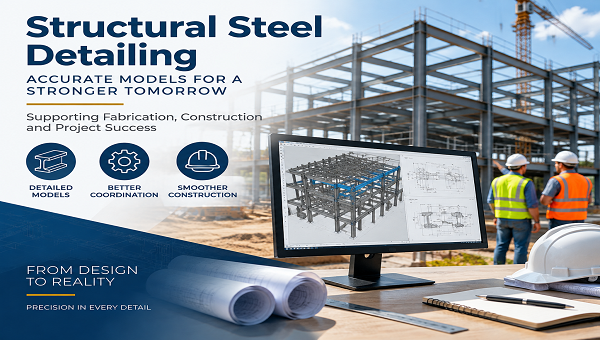
Structural steel plays an important role in commercial buildings, industrial facilities, warehouses, and many other construction projects. However, strong materials alone are not enough to ensure a successful project. Every beam, column, brace, plate, and connection must fit the overall structural design. Therefore, accurate detailing is essential before fabrication and installation begin. Structural steel detailing converts engineering information into practical drawings and digital models that fabricators and contractors can understand. These details explain how structural components should be produced, connected, and installed. As a result, accurate detailing helps create a clearer path from structural design to physical construction. Modern construction projects also involve several teams working together. Engineers, architects, detailers, fabricators, contractors, and installers all depend on reliable project information. Therefore, accurate structural documentation can improve communication and reduce avoidable problems during construction.
Key Takeaways
- Accurate structural steel detailing supports fabrication, installation, and project coordination.
- Detailed models and drawings can help identify potential problems before fabrication begins.
- Professional detailing workflows can improve communication between engineers, fabricators, contractors, and field teams.
What Is Structural Steel Detailing?
Structural steel detailing is the process of developing detailed information for the fabrication and installation of steel components. While structural engineers establish design requirements, detailers translate those requirements into practical construction information. The detailing process covers the geometry, dimensions, connections, materials, and assembly requirements associated with structural steel. Therefore, the detailer plays an important role between engineering design and actual construction. A detailed model can also provide a clearer understanding of how individual steel components fit together. Consequently, project teams can review the structure before materials are fabricated or delivered to the construction site. For projects that require professional support, structural steel detailing services can help create accurate structural information for fabrication and construction workflows.
Why Accurate Steel Detailing Matters
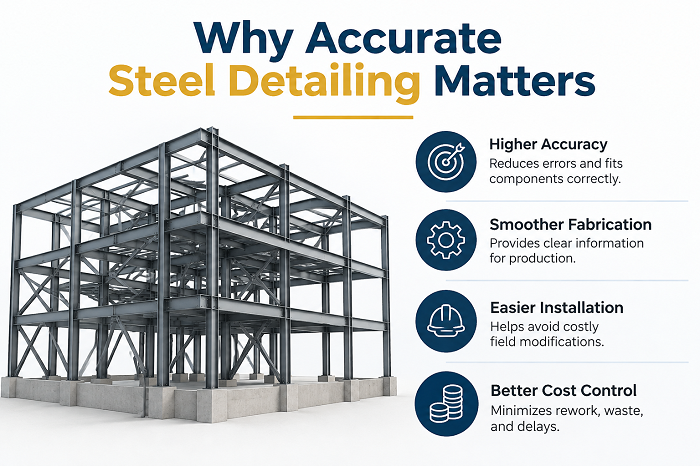
Accuracy is one of the most important requirements in steel construction. Even a small error in a dimension, connection, or component location can create problems later in the project. For example, an incorrectly detailed connection may not align properly with another structural member during installation. Consequently, contractors may need to make adjustments in the field. These changes can affect project schedules, labor requirements, and construction costs. Accurate detailing helps identify such issues earlier. Furthermore, detailed documentation gives fabricators clear information instead of requiring them to rely on assumptions. This creates a more predictable workflow from fabrication through installation. Therefore, quality detailing should be considered an important part of project planning rather than simply a documentation task.
How Detailing Supports Steel Fabrication
Steel fabrication depends heavily on accurate project information. Fabricators need to understand the dimensions, materials, connections, and assembly requirements for each component before production begins. Detailed drawings provide the information needed to manufacture structural members correctly. Additionally, digital models can help fabricators visualize complex areas before beginning physical work. This becomes particularly useful on projects that contain complicated connections or large numbers of structural components. When the information is clear, fabrication teams can work with greater confidence. Furthermore, accurate detailing can help reduce unnecessary material waste. When components are properly planned, fabrication teams can organize their production processes more efficiently.
Improving Coordination Between Design Teams
Construction projects involve multiple disciplines. Therefore, structural steel must coordinate with architectural, mechanical, electrical, and other building systems. A steel beam, column, or connection may occupy space needed by another building system. If such a conflict is discovered during construction, correcting it can become difficult and expensive. However, coordinated digital models allow teams to review these relationships earlier. As a result, designers and contractors can identify potential conflicts before fabrication or installation. This approach also improves communication because different project participants can refer to the same coordinated information. Therefore, structural detailing contributes to more effective collaboration throughout the construction process.
The Role of BIM in Steel Detailing
Building Information Modeling has changed how structural information is created and shared. Instead of relying only on two-dimensional drawings, project teams can use detailed digital models to understand structural systems. A BIM model can represent structural components while also containing useful information about their relationships and properties. Therefore, teams can review both the physical arrangement and associated project information. Additionally, digital models can support design reviews, coordination meetings, and construction planning. When project participants work with consistent information, communication can become more efficient. BIM-based detailing can therefore support the entire process from structural design through fabrication and installation.
Detecting Problems Before Construction
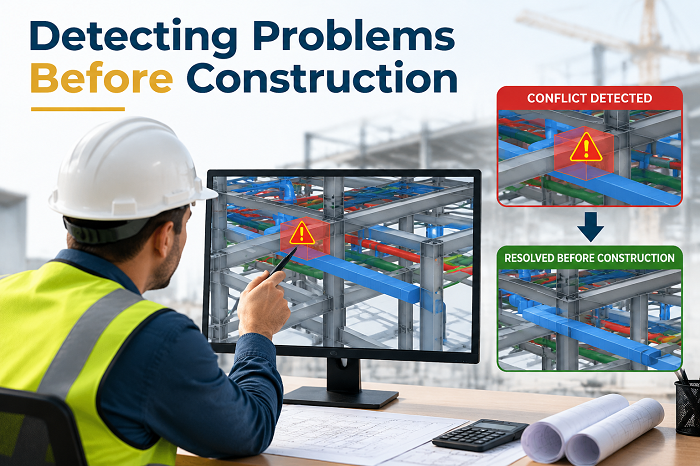
One of the major benefits of detailed structural modeling is early problem detection. Construction errors can become expensive once steel components have already been fabricated or delivered. Therefore, identifying potential issues during the modeling stage can help teams avoid unnecessary rework. For example, project teams can review whether structural members interfere with other building systems. They can also examine whether connections have enough space and whether components can be installed as planned. Additionally, visual model reviews can make complex structural areas easier to understand. This can help project managers, engineers, and contractors communicate more effectively. Early coordination does not eliminate every construction challenge. However, it can reduce the number of problems that reach the fabrication and field stages.
Supporting Better Material Planning
Accurate detailing can also support material planning for construction projects across the United States. When structural components are clearly documented, teams can develop a better understanding of the materials required for fabrication and installation. This information helps contractors and fabricators organize purchasing, scheduling, and production activities more effectively. Furthermore, accurate material details can reduce unnecessary waste by helping fabrication teams make better use of available steel components. When structural elements are properly planned, materials can be prepared according to project requirements, reducing delays and improving workflow efficiency. Better planning also supports delivery coordination throughout the construction process. Components can be organized based on fabrication and installation requirements, ensuring materials arrive in the correct sequence instead of creating unnecessary storage challenges on the job site.
Improving Construction Site Installation
The value of structural detailing continues after fabrication. Installation teams need clear information about where each component belongs and how it should connect to surrounding elements. Detailed drawings provide a reference for field teams during installation. Additionally, digital models can provide useful visualization when workers encounter complex structural areas. This can reduce confusion and help installation teams understand the intended arrangement of the structure. Furthermore, accurate information allows contractors to identify potential installation concerns before workers begin assembling components. As a result, detailing can support a more organized construction process.
Handling Complex Structural Projects
Simple structures may require relatively straightforward detailing. However, large commercial, industrial, and infrastructure projects can involve thousands of components and highly complex connections. Therefore, detailed modeling becomes increasingly important as project complexity grows. Large projects often require close coordination between structural design, fabrication, transportation, and field installation. A well-organized detailing workflow helps manage the large volume of information involved. Additionally, complex projects may require frequent revisions. Accurate digital models make it easier to track changes and communicate updated information to the relevant teams.
Choosing the Right Detailing Approach
Every project has different requirements. Therefore, the detailing approach should reflect the structure, project standards, fabrication process, and construction schedule. Before detailing begins, teams should establish clear expectations regarding drawing standards, modeling requirements, coordination procedures, revisions, and final deliverables. Additionally, communication between engineers and detailers is essential. If project requirements are unclear, detailers may need additional clarification before completing affected areas. Clear requirements at the beginning of a project can therefore reduce interruptions and create a smoother detailing process.
The Importance of Experienced Detailing Professionals
Structural steel detailing requires technical knowledge, accuracy, and attention to detail. Therefore, experienced professionals can provide valuable support throughout the project lifecycle. A skilled detailing team understands how to interpret structural information and convert it into practical fabrication and construction documents. Additionally, experienced detailers can recognize potential coordination concerns during the modeling process. Identifying these issues early gives project teams more time to review and resolve them. Professional detailing support can be particularly useful when internal teams have limited capacity or when projects involve complex structures and demanding schedules.
How Steel Detailing Supports Cost Control
Construction costs can increase because of rework, material waste, delays, and field modifications. Therefore, accurate detailing can contribute to better cost management throughout the project lifecycle. When project information is clear before fabrication begins, teams can reduce uncertainty and improve planning. Fabricators can work from more reliable information, while contractors can prepare for installation with greater confidence. Additionally, identifying coordination issues before fabrication can reduce the likelihood of expensive corrections later. A professional structural BIM company can help project teams improve coordination, review detailed models, and identify potential issues earlier in the construction process. This allows engineers, fabricators, and contractors to make informed decisions before problems affect the budget or schedule. However, detailing should form part of a broader project management and cost-control strategy. It cannot eliminate every potential construction cost or risk, but it can provide better project visibility, improve communication, and support more efficient workflows from design through installation.
Steel Detailing and Construction Communication
Good communication is essential for successful construction. However, verbal instructions alone are rarely sufficient for complex structural work. Detailed drawings and digital models provide a shared reference that different teams can review. Engineers can communicate design requirements, fabricators can understand production information, and contractors can coordinate installation activities using consistent documentation. Furthermore, organized documentation makes it easier to manage revisions when project requirements change. As a result, structural detailing supports not only technical accuracy but also communication between different project participants.
Final Thoughts
Structural steel detailing is an essential part of turning structural designs into practical construction information. Accurate drawings and digital models help fabricators understand production requirements while giving contractors clearer information for installation. Furthermore, BIM-based detailing can improve coordination between different project disciplines and help identify potential problems before they become costly field issues. As construction projects become more complex, accurate structural information becomes increasingly important. By combining detailed modeling, clear documentation, careful coordination, and experienced professionals, project teams can create a more organized workflow from design through fabrication and installation.