

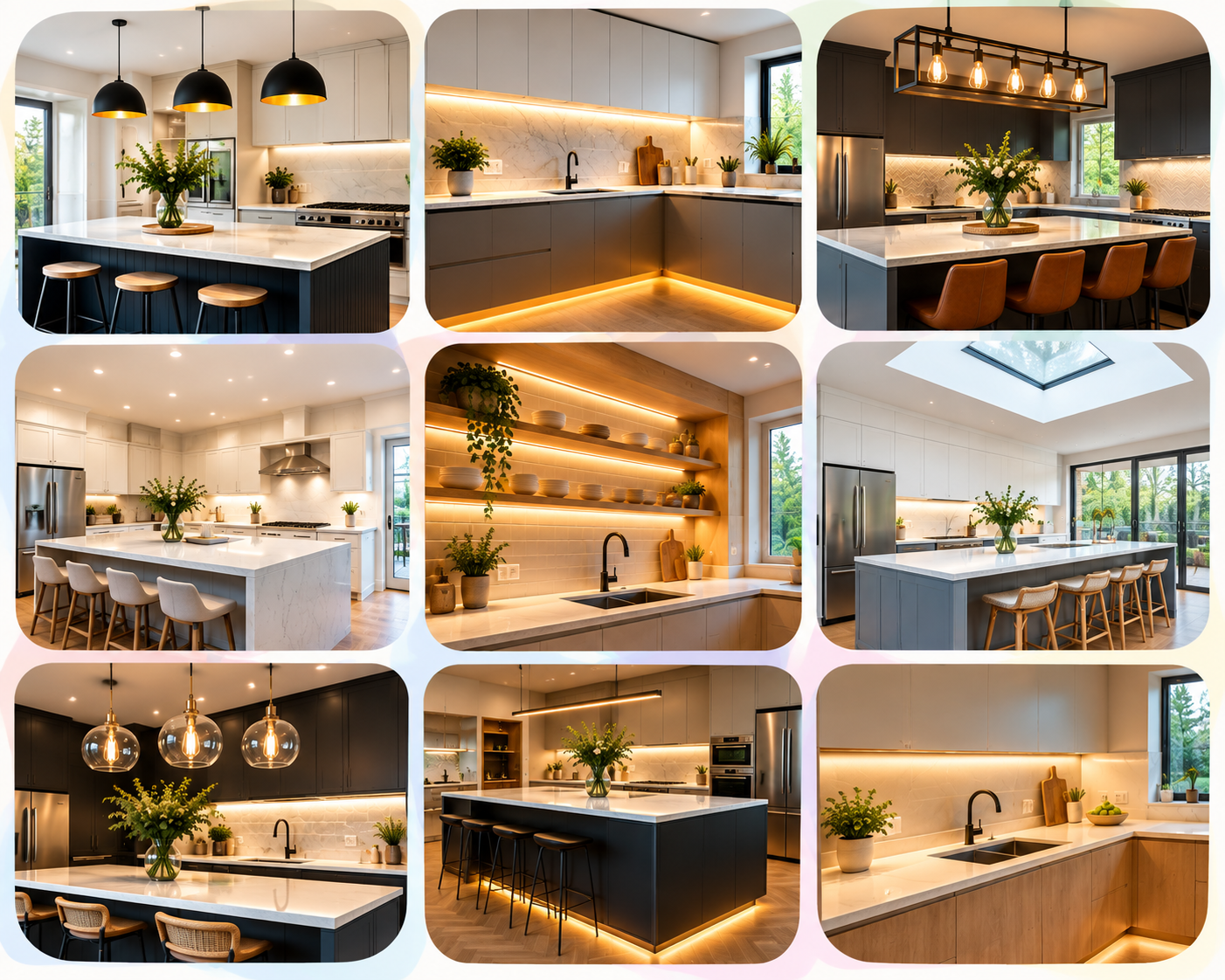
Ever walked into a kitchen and felt instantly at home? Or perhaps you’ve noticed how some spaces just feel flat, no matter how gorgeous the cabinetry looks? Here’s the thing – lighting makes all the difference. It’s the secret ingredient that can turn an ordinary cooking space into the heart of your home.
Good kitchen lighting does so much more than help you see what you’re chopping. It sets the mood for family dinners, makes meal prep safer, and can even make your space appear larger than it actually is. Whether you’re renovating a heritage home in Melbourne or updating a modern apartment in Sydney, getting your lighting right is absolutely key.
In this guide, we’ll walk you through everything you need to know about kitchen lighting. From understanding the three essential layers of light to picking the perfect pendants for your island bench, we’ve got you covered. You’ll discover practical tips for small kitchens, learn how to brighten spaces without natural light, and find out whether smart lighting is worth the investment. Let’s get into it.
Understanding the Three Layers of Kitchen Lighting
Before you start shopping for fixtures, it’s worth understanding how professional designers approach kitchen lighting. They work with three distinct layers: ambient, task, and accent lighting. Getting this balance right transforms your kitchen from functional to fabulous.
Ambient Lighting: Setting the Foundation
Think of ambient lighting as your kitchen’s base layer, especially when planning kitchen renovations. It’s the general illumination that fills the room when you flick the main switch. Typically, this comes from ceiling-mounted fixtures like downlights, flush mounts, or even a central pendant.
The goal here is even, comfortable light that covers the whole space. You want enough brightness to move around safely, but not so harsh it feels like a hospital corridor. Most kitchens need around 300-400 lux for ambient lighting – your electrician can help calculate this based on your room size.
Task Lighting: Where Function Meets Form
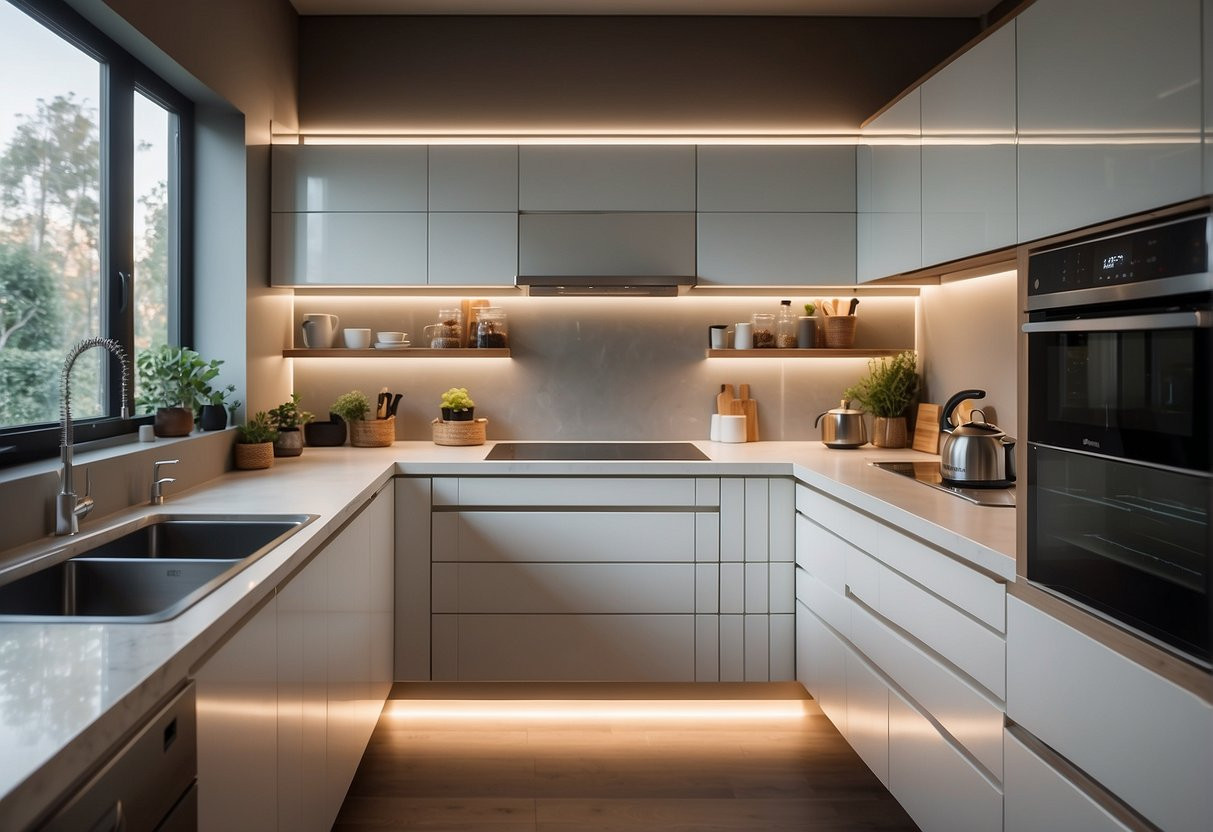
This is the workhorse of kitchen lighting. Task lighting focuses bright, directed light exactly where you need it – over benchtops, cooktops, and sinks. Under-cabinet lights are the classic choice here, but recessed downlights positioned strategically also work brilliantly.
Getting task lighting right means safer food preparation and less eye strain. Nobody wants to chop vegetables in shadow. Aim for around 500-750 lux on your main work surfaces.
Accent Lighting: Adding Personality and Depth
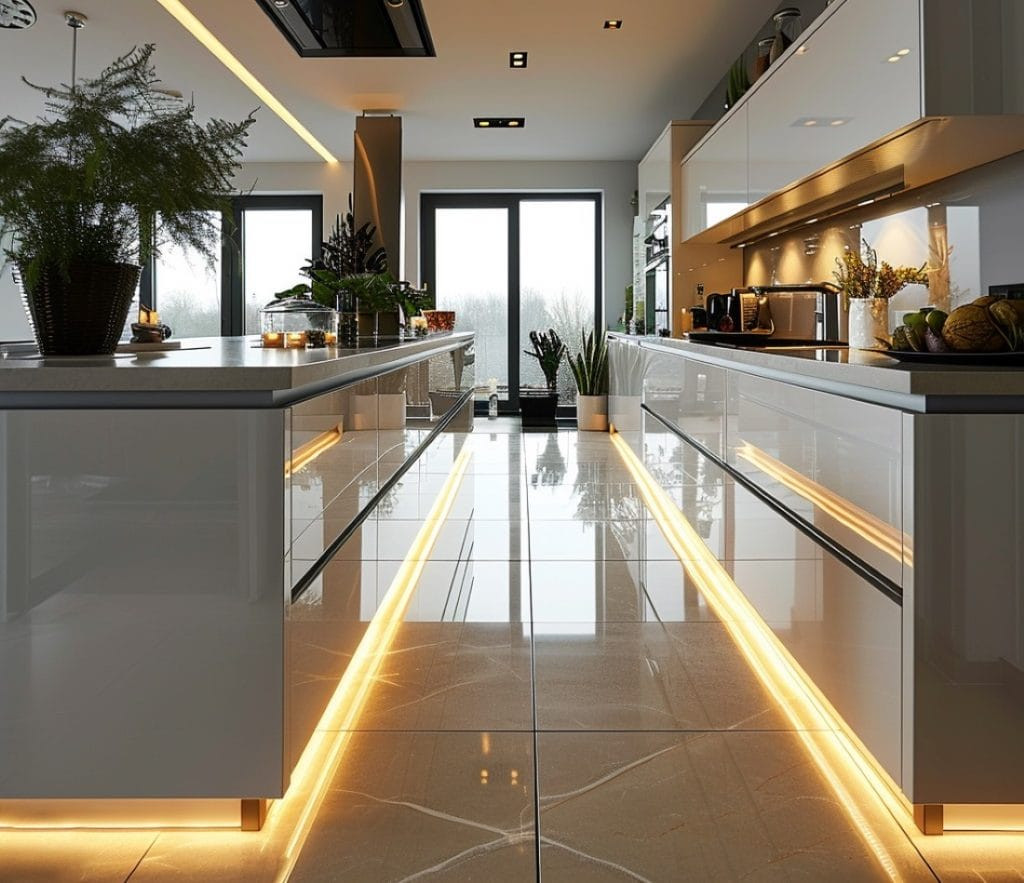
Accent lighting is where you can really have some fun. This layer highlights architectural features, displays collections, or adds warmth to specific areas. Think in-cabinet lighting that shows off your glassware, toe-kick lights that create a floating effect, or picture lights above artwork.
While not essential, accent lighting adds that designer touch that makes guests say “wow” when they walk in.
What Is the Best Lighting for a Kitchen?
There’s no single answer here – the best lighting depends entirely on your space, style, and how you use your kitchen. However, a thoughtful combination of all three layers typically delivers the most impressive results.
Matching Lighting to Your Kitchen Layout
Galley kitchens benefit from linear fixtures that draw the eye through the space. Open-plan kitchen-diners need zoned lighting to define different areas. L-shaped layouts often work well with a mix of overhead ambient light and targeted task lighting under cabinets.
Consider your traffic flow too. You don’t want to create shadows in high-use areas or install pendants where people might bump their heads.
How Do I Choose the Right Colour Temperature?
Colour temperature is measured in Kelvin (K), and it dramatically affects the feel of your space. Warm white (2700-3000K) creates a cosy, inviting atmosphere – perfect for traditional kitchens. Neutral white (3500-4000K) offers a crisp, clean look that suits contemporary spaces. Cool white (4000K+) provides excellent clarity for task work but can feel clinical.
Many Australian homeowners opt for warm white in living areas and neutral white for kitchens. The key is consistency – mixing temperatures looks messy.
Kitchen Island Lighting Ideas That Make a Statement
Your kitchen island is often the focal point of the room, and the lighting above it deserves special attention. Pendant lights remain the most popular choice, offering both practical illumination and serious style points.
Pendant Lights: Sizing and Spacing Guide
Size matters when it comes to pendant lights. A common rule suggests your pendant diameter should be roughly one-third the width of your island. For a 1.2-metre island, look at pendants around 350-400mm wide.
Spacing is equally important. Leave at least 600mm between each pendant and keep them 750-900mm above the benchtop surface. This prevents head bumps while providing adequate light spread.
How Many Pendant Lights Do I Need Over a Kitchen Island?
For islands under 1.8 metres, two pendants usually work perfectly. Islands between 1.8 and 2.4 metres often need three. Anything larger might require four or more, or you could opt for a single linear suspension fixture instead.
Odd numbers tend to look more visually pleasing than even numbers – that’s a handy design trick worth remembering.
How Do You Light a Kitchen with No Natural Light?
Inner-city apartments and older homes often have kitchens tucked away from windows. Don’t worry – you can absolutely create a bright, welcoming space with the right approach.
Maximising Artificial Light Sources
Layer your lighting generously. Combine multiple light sources at different heights to mimic the variety natural light provides. Consider adding more fixtures than you think you need – it’s easier to dim excess light than to add more later.
Choose higher colour temperatures (3500-4000K) to replicate daylight’s crispness. This helps prevent that cave-like feeling windowless kitchens can develop.
Reflective Surfaces and Strategic Placement
Light-coloured benchtops, glossy splashbacks, and glass-fronted cabinets all bounce light around the room. Position your fixtures to take advantage of these reflective surfaces.
Mirror splashbacks can effectively double your perceived light. Similarly, pale flooring and white cabinetry amplify whatever light you have.
Small Kitchen Lighting Ideas to Open Up Your Space
Compact kitchens present unique challenges, but clever lighting can make them feel surprisingly spacious.
Creating the Illusion of Space with Light
Avoid bulky fixtures that visually crowd the ceiling. Recessed downlights keep things streamlined while providing excellent coverage. Under-cabinet lighting eliminates shadows and makes benchtops feel more expansive.
Consider continuous LED strips rather than individual puck lights – they create smoother, more uniform illumination that tricks the eye into perceiving more space.
Best Fixtures for Compact Kitchens
Slim-profile pendants work well over small islands or breakfast bars. Flush-mount ceiling lights suit low ceilings. Track lighting offers flexibility – you can reposition spotlights as needed without calling an electrician.
Glass or open-frame fixtures allow light to pass through, keeping the visual weight minimal.
Is LED Lighting Good for Kitchens?
In a word: absolutely. LED technology has revolutionised kitchen renovations and kitchen lighting, and there’s really no reason to choose anything else for most applications today.
Energy Efficiency and Cost Savings
LEDs use around 75% less energy than traditional incandescent bulbs and last significantly longer – often 25,000 hours or more. That translates to lower electricity bills and fewer replacement hassles, especially for hard-to-reach fixtures.
Australian energy costs keep climbing, making this efficiency increasingly valuable. Many households recoup their LED investment within two years through energy savings alone.
Comparing LED, Halogen, and Fluorescent Options
Halogen bulbs offer excellent colour rendering but run hot and guzzle power. They’re being phased out in Australia anyway. Fluorescent tubes are efficient but often flicker and struggle with colour quality.
LEDs win on virtually every measure: efficiency, lifespan, colour options, instant-on capability, and dimming compatibility. Plus, they don’t generate the heat that can make kitchens uncomfortable.
Smart Kitchen Lighting: Worth the Investment?
Smart lighting has moved from luxury to mainstream, with prices dropping significantly over recent years. But is it right for your kitchen?
Dimmer Switches and Automated Controls
At minimum, install dimmer switches on your main lighting circuits. They cost little extra but offer huge flexibility – bright light for cooking, softer ambiance for entertaining.
Programmable timers and motion sensors add convenience. Imagine lights that automatically brighten when you enter and dim after you leave.
Voice-Controlled Lighting Options
Systems like Google Home or Amazon Alexa integrate beautifully with smart bulbs and switches, making them a useful addition to modern kitchen renovations. Asking for “kitchen lights at 50%” while your hands are covered in flour is genuinely useful, not just a gimmick.
Most smart systems also allow remote control via smartphone – handy for checking you’ve turned everything off after leaving home.
Creating Your Perfect Kitchen Lighting Plan
Getting your kitchen lighting right doesn’t have to be overwhelming. Start by mapping your space and identifying work zones, traffic areas, and focal points. Think about how you actually use your kitchen – morning coffee spots, evening meal prep, casual dining.
Layer your lighting thoughtfully, combining ambient, task, and accent sources. Choose LED wherever possible for efficiency and longevity. Don’t forget dimmers – they’re inexpensive additions that dramatically increase flexibility. Consider smart controls if your budget allows.
Most importantly, take your time making decisions. Live with your current lighting for a while and notice where shadows fall, where you squint, and where extra brightness would help. These observations guide better choices than any catalogue ever could.
Your kitchen deserves lighting that works as hard as you do – and looks beautiful doing it. With these ideas in your toolkit, you’re well on your way to creating a space that truly transforms how you cook, gather, and live.