

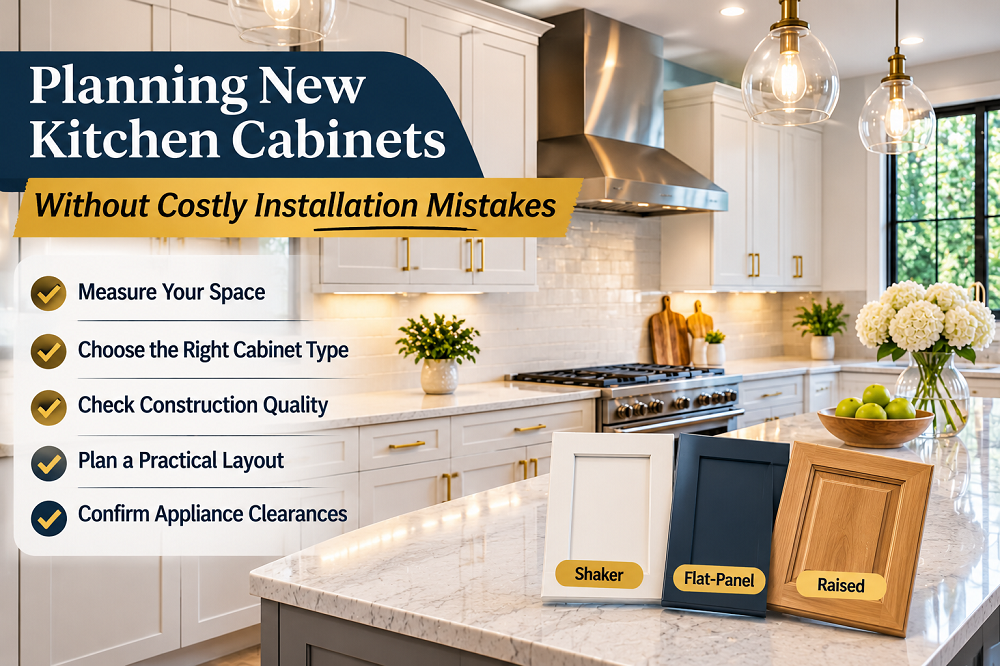
Kitchen cabinets affect storage, organization, and the appearance of the entire room. However, choosing attractive cabinet doors does not guarantee a successful renovation. Cabinets must fit the available space, support countertops, and allow appliances to operate correctly. Poor measurements or weak construction can create problems that become difficult to correct after installation. Therefore, homeowners should understand cabinet materials, layout planning, storage features, and installation requirements before ordering new cabinetry.
Why Kitchen Cabinet Installation Matters
Cabinet installation connects kitchen design with everyday function. Even high-quality cabinets may perform poorly when the layout creates blocked drawers, uneven surfaces, or uncomfortable walking space. Professional cabinet installation services can help homeowners coordinate cabinet placement, measurements, and installation details. However, successful results begin with a design that suits the kitchen’s actual dimensions and daily needs. For homeowners in Columbia, Maryland, reviewing the existing kitchen before purchasing cabinets can help identify layout limitations and support a more practical renovation.
Identify the Problems With Existing Cabinets
Before replacing cabinetry, we should examine why the current arrangement no longer works. Some kitchens lack storage. Others have cabinets that remain useful but need better hardware or organizational features. Therefore, complete replacement is not always necessary.
Check Cabinet Condition
We should inspect cabinet boxes, shelves, drawers, and hinges. For example, moisture damage around the sink may weaken cabinet materials. Meanwhile, loose hinges or worn drawer slides may cause daily frustration. However, small hardware problems may be repairable without replacing the entire cabinet system.
Consider Storage Needs
A household that cooks frequently may need deep drawers for pans. Meanwhile, homeowners with small kitchens may value tall pantry storage. We should identify what needs to fit inside the cabinets. This helps establish useful dimensions.
Plan Cabinet Layout Before Choosing Door Styles
The cabinet layout determines how easily people move around the kitchen. However, a design that looks attractive in a showroom may not suit the actual room. Therefore, measurements should guide the first decisions.
Review Appliance Clearances
Refrigerators, dishwashers, and ovens require suitable space to open. We should confirm the exact appliance models and specifications. However, cabinet doors and drawers also need clearance. A poorly positioned handle can interfere with a neighboring appliance.
Check Corner Arrangements
Kitchen corners often create difficult storage areas. However, pull-out mechanisms or rotating shelves may improve access. We should compare available accessories with the cabinet dimensions. Some corner solutions require additional internal space. Therefore, product specifications matter.
Compare Kitchen Cabinet Types
Cabinets generally fall into stock, semi-custom, and custom categories. However, the available sizes and features vary among manufacturers.
Stock Kitchen Cabinets
Stock cabinets come in standard sizes. They may offer a practical option for straightforward kitchen layouts. However, unusual wall dimensions can require filler panels or other adjustments. We should measure carefully before deciding.
Semi-Custom Cabinets
Semi-custom cabinets may offer additional size and finish choices. Therefore, they can suit homeowners who want more flexibility without fully custom production. However, customization options and pricing vary. We should compare the specifications.
Custom Cabinetry
Custom cabinetry can address unusual spaces and specific storage needs. However, greater design flexibility often involves additional cost. We should consider whether the extra features solve practical problems. A customized arrangement should support daily function.
Understand Cabinet Construction Quality
Cabinet appearance does not always reveal construction quality. Therefore, we should inspect the cabinet boxes and hardware.
Compare Cabinet Box Materials
Plywood, MDF, particleboard, and other engineered materials appear in cabinet construction. However, durability depends on material grade, assembly quality, and moisture protection. We should compare product specifications rather than assume one label guarantees quality.
Review Drawer Slides
Kitchen drawers open and close frequently. Therefore, slides should support the intended contents. Soft-close features can improve everyday comfort. However, hardware quality varies by manufacturer. We should test drawer operation whenever possible.
Examine Hinges and Door Alignment
Cabinet doors should open smoothly and remain properly aligned. However, hinges may require adjustment after installation. We should ask about hardware specifications and service procedures. Reliable hinges contribute to long-term use.
Choose Cabinet Door Styles That Suit the Kitchen
Cabinet doors occupy a large visible area. Therefore, their style influences the overall appearance. Shaker doors offer a versatile framed design. Meanwhile, flat-panel doors create a simpler contemporary look.
Shaker Cabinets
Shaker doors can complement modern and traditional kitchens. Their balanced design works with many countertop materials. However, the chosen paint or wood finish still affects the final appearance. We should compare actual samples.
Flat-Panel Cabinets
Flat-panel cabinets create clean visual lines. They may suit kitchens with modern appliances and simple hardware. However, smooth surfaces can show fingerprints depending on the finish. We should consider maintenance as well as appearance.
Raised-Panel Cabinets
Raised-panel doors contain more decorative detail. They can complement traditional homes. However, heavily detailed doors may compete with bold countertop patterns. We should balance the different materials.
Make Kitchen Storage More Functional
More cabinets do not always create better storage. Instead, we should place useful accessories where they support daily activities.
Use Deep Drawers
Deep drawers can provide convenient storage for cookware. However, their dimensions and weight capacity should match the intended items. We should avoid selecting hardware based only on appearance.
Add Pull-Out Storage
Pull-out shelves may improve access to deep lower cabinets. Meanwhile, narrow organizers can hold spices or baking trays. However, these accessories reduce some internal storage space. We should compare their practical benefits before purchasing.
Plan Pantry Cabinets
A pantry cabinet can help organize food and small appliances. However, shelves should remain accessible. We should consider adjustable shelving for changing storage needs. Useful organization can reduce kitchen clutter.
Coordinate Cabinets With New Countertops
Cabinets provide the base for countertop installation. Therefore, countertop planning should begin during cabinet design rather than after installation. Professional kitchen countertop installation can help coordinate measurements, stone selection, sink openings, and edge details with the completed cabinet arrangement.
Check Countertop Support
Natural stone countertops can be heavy. Therefore, cabinets should provide suitable support. However, the required support depends on material, thickness, and installation conditions. We should discuss those requirements before fabrication.
Plan Kitchen Islands
An island may include cabinets, drawers, and seating. However, countertop overhangs can require additional support. We should review island dimensions and walking clearances. A practical island should improve the kitchen without crowding it.
Understand Cabinet Installation Costs
Cabinet pricing depends on materials, construction, size, finishes, and storage features. However, the purchase price may not include delivery or installation. Therefore, we should request a complete project estimate.
Include Additional Work
Removing old cabinets can reveal wall or flooring damage. Meanwhile, changing layouts may require plumbing or electrical work. We should ask whether those activities are included. A detailed proposal can help prevent budget confusion.
Keep the Existing Layout When Practical
Moving appliances may increase renovation complexity. However, keeping their locations can help control costs when the current arrangement works well. We should consider whether additional changes offer enough benefit. The budget should support practical improvements.
Choose a Suitable Cabinet Installation Contractor
A contractor should understand measurements, cabinet assembly, leveling, hardware adjustment, and countertop coordination. However, choosing only by price may overlook important workmanship details. Homeowners considering a cabinet contractor in Columbia MD should review relevant completed projects, installation scope, and communication practices.
Confirm Final Measurements
Walls and floors may not be perfectly level. Therefore, cabinet measurements should reflect actual conditions. We should also confirm appliance openings and corner clearances. Errors at this stage may affect several cabinets.
Discuss Installation Responsibilities
The proposal should explain who handles old cabinet removal, material delivery, installation, and finishing. Moreover, it should describe how damaged or missing products will be handled. Clear responsibilities help avoid delays.
Prepare for Kitchen Cabinet Installation
Homeowners should empty cabinets and remove nearby belongings before work begins. However, the contractor should explain specific preparation needs. We should also protect furniture and household items outside the work area.
Coordinate the Construction Sequence
Cabinets may need to be installed before final countertop templating. Therefore, the project schedule should account for this dependency. We should also coordinate backsplash work and plumbing reconnection. Clear scheduling makes installation more manageable.
Inspect the Finished Cabinets
After installation, we should open and close every cabinet door and drawer. We should also inspect alignment, hardware, visible finishes, and stability. However, some adjustments may be necessary after the initial installation. A final walkthrough helps identify concerns before project completion.
Common Cabinet Installation Mistakes
One mistake is ordering cabinets before confirming appliance dimensions. Another is overlooking corner clearance or countertop support. Homeowners may also choose expensive accessories that do not match their storage needs. Therefore, we should review the layout, materials, and construction details together.
Final Thoughts
Kitchen cabinet installation can improve storage, organization, and visual appeal. However, successful results depend on accurate measurements, reliable construction, useful accessories, and coordinated countertop planning. We should understand the complete project before ordering cabinets. With careful planning and qualified installation support, homeowners can create a kitchen that feels more organized and comfortable.
FAQs
1. What should homeowners consider before installing new kitchen cabinets?
Before installing new kitchen cabinets, homeowners should evaluate their kitchen layout, storage needs, cabinet materials, and appliance clearances. Accurate measurements, reliable hardware, and proper countertop support are essential. Planning these details before ordering can help prevent installation problems and unnecessary expenses.
2. What factors affect the total cost of kitchen cabinet installation?
Kitchen cabinet installation costs depend on cabinet type, materials, kitchen size, door styles, hardware, and customization. Additional expenses may include removing old cabinets, repairing walls or flooring, adjusting plumbing or electrical systems, and installing storage accessories. Requesting a detailed estimate helps homeowners plan their budget.
3. What are the most common kitchen cabinet installation mistakes?
Common mistakes include ordering cabinets without accurate measurements, overlooking appliance and drawer clearances, choosing unsuitable storage accessories, and failing to coordinate countertop installation. Poor cabinet leveling and inadequate support can also create problems. Reviewing the complete design with a qualified installer helps avoid these issues.