

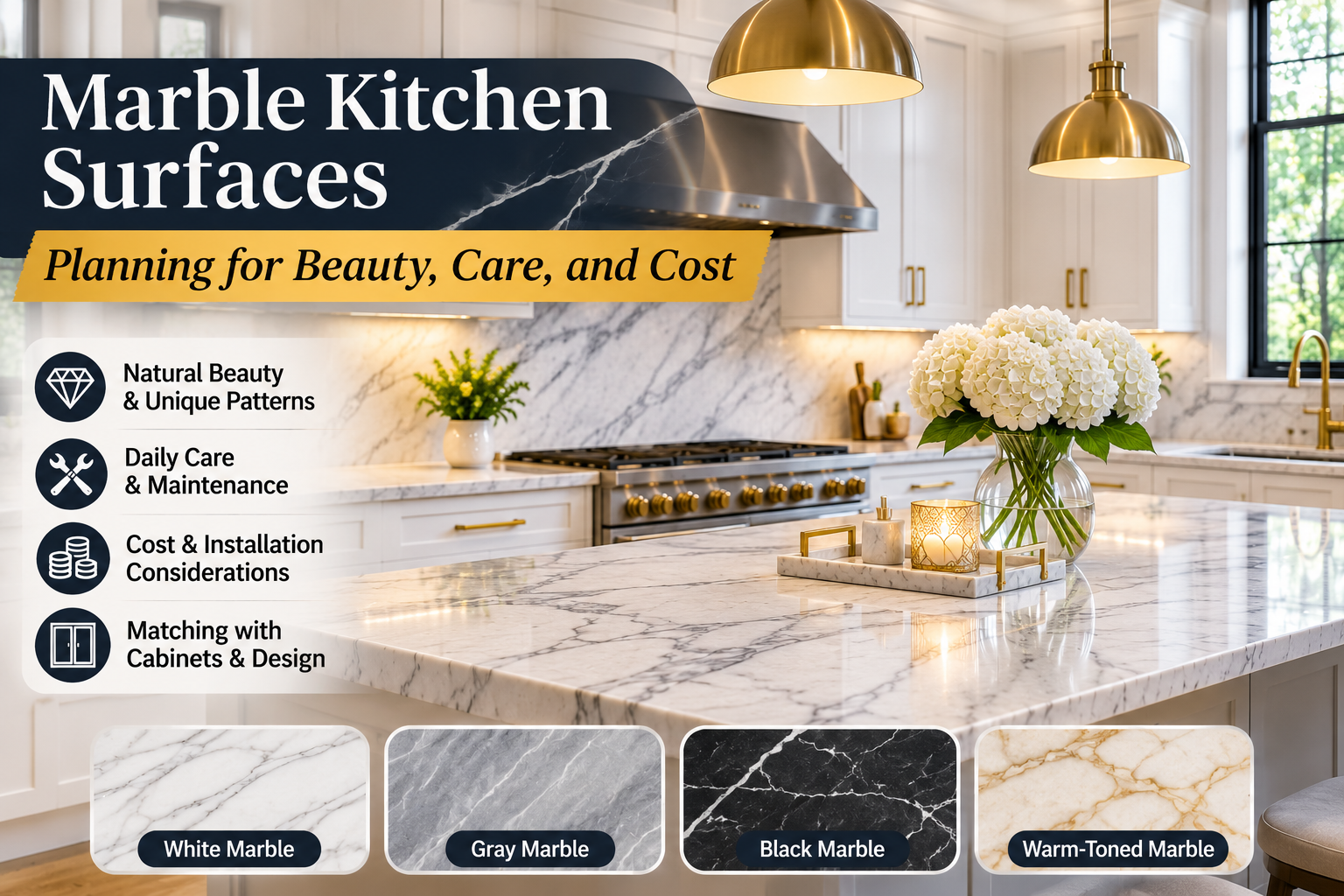
Marble can give a kitchen a distinctive appearance through its natural veining and mineral colors. However, choosing marble involves more than selecting an attractive slab. Its surface characteristics, maintenance needs, fabrication requirements, and installation costs deserve careful attention. We should consider how the kitchen will be used before deciding whether marble suits the household. A thoughtful approach can help homeowners enjoy the material’s appearance while understanding the responsibilities that come with natural stone.
Understand What Makes Marble Appealing
Marble forms naturally and contains mineral patterns that vary between slabs. Some varieties feature soft gray veins, while others show bold movement or warmer colors. Therefore, every slab can contribute a different character to the kitchen. Choosing marble kitchen countertops involves comparing actual stone colors, finishes, and maintenance requirements. However, a beautiful photograph cannot show every characteristic of the material. We should examine the slab and understand how it will behave during everyday use. For homeowners in Columbus, Ohio, United States, viewing marble alongside cabinet samples can help establish a kitchen design that feels coordinated.
Decide Whether Marble Fits Daily Kitchen Activities
Different kitchens experience different levels of use. A household that prepares several meals each day may expose countertops to more spills, utensils, and cleaning. Therefore, we should understand marble’s characteristics before purchasing.
Consider Food Preparation Habits
Marble contains carbonate minerals that react with acids. Therefore, substances such as lemon juice or vinegar can cause etching. We should use cutting boards and clean spills promptly. However, even careful maintenance cannot prevent every mark.
Understand Natural Patina
Some homeowners appreciate the way marble changes with use. Over time, a surface may develop small marks that contribute to a natural patina. However, homeowners who expect a consistently flawless finish may find marble maintenance frustrating. We should consider this preference before choosing.
Think About the Kitchen’s Purpose
Marble may suit a kitchen where appearance is a major priority. However, heavily used cooking areas may require more attention. We should compare the material with alternatives rather than assume natural beauty makes it suitable for every household.
Explore Marble’s Natural Color Range
Marble comes in many colors and patterns. However, white and gray varieties are especially familiar in residential kitchen design. We should look beyond the general color name and examine the stone’s undertones.
White Marble
White marble can create a bright appearance with natural veining. It often complements traditional and modern cabinets. However, some white slabs contain warm cream tones, while others appear cooler. We should compare actual samples before ordering.
Gray Marble
Gray marble may create a softer contrast beside white cabinetry. Meanwhile, darker gray varieties can become a strong design feature. However, pattern intensity influences how busy the finished kitchen appears.
Black Marble
Black marble can provide a dramatic appearance, particularly with lighter cabinets. However, some dark polished surfaces may show marks and water spots more clearly. We should consider the kitchen’s lighting and maintenance requirements.
Warm-Toned Marble
Cream, beige, and other warm marble varieties can complement natural wood cabinetry. However, their mineral patterns may introduce additional colors. We should choose backsplash materials that support those tones.
Compare Marble Colors With Cabinet Finishes
Cabinet color and marble selection should happen together. However, we should avoid choosing an entire kitchen from separate photographs. Exploring marble countertop colors can help homeowners compare natural patterns and identify suitable design directions. The next step is examining physical samples under the room’s lighting.
White Cabinets With Marble
White cabinets can create a classic appearance with gray-veined marble. However, cabinet and stone whites should complement each other. We should compare painted samples with the actual marble slab.
Dark Cabinets With Light Marble
Navy, charcoal, or black cabinets can provide contrast with lighter marble. However, using several dark finishes may make a small room feel heavy. We should balance the combination with suitable lighting and flooring.
Natural Wood Cabinets
Wood cabinets can introduce warmth. Meanwhile, light marble may create contrast without making the kitchen feel overly formal. However, wood undertones and marble background colors should work together.
Plan Marble Patterns Across the Kitchen
Marble veining is part of its visual appeal. However, its movement can create design challenges when a kitchen requires several countertop sections. We should consider where the largest patterns will appear.
Kitchen Island Focal Points
An island can display a dramatic slab. Therefore, we may choose a stone with strong movement for the central surface. However, slab size and available material influence the layout. We should review the placement before fabrication.
Understand Seam Appearance
Large countertop runs may require seams. However, natural marble patterns will not always align perfectly. We should ask the fabricator about placement and expected visual differences.
Consider Backsplash Continuity
Using the same marble behind the countertop may create an elegant appearance. However, matching veins can require additional planning and material. We should compare this approach with a simpler tile backsplash before deciding. Comparing ceramic and porcelain wall tile styles by color, size, and finish can help homeowners decide whether a backsplash will complement the marble or compete with it.
Select a Marble Finish
Different marble finishes create different appearances. However, finish availability depends on the selected stone and supplier. We should compare samples rather than choose based only on a photograph.
Polished Marble
Polished marble provides a reflective appearance that can emphasize natural veining. However, etching may appear more noticeable against the glossy finish. We should understand this before selecting polished marble for a busy kitchen.
Honed Marble
Honed marble has a softer, less reflective appearance. Therefore, it may suit homeowners who prefer a muted finish. However, honing does not make marble resistant to acids or stains. We should continue using suitable care practices.
Understand Marble Sealing and Cleaning
Marble is a natural stone, and some slabs absorb liquids more readily than others. Therefore, sealing may help reduce certain staining risks. However, sealing does not prevent acidic etching.
Clean With Suitable Products
We should use cleaners recommended for marble. However, acidic or abrasive products may affect the surface. A soft cloth and regular cleaning can help maintain the countertop.
Manage Spills Quickly
Wine, coffee, oil, and other liquids can create staining risks. Therefore, we should remove spills promptly. However, the response depends on the substance and stone finish. We should follow appropriate care guidance.
Protect the Surface During Cooking
Cutting boards can protect the countertop from direct cutting and food acids. Meanwhile, trivets can help protect surfaces from hot cookware and sudden temperature changes. These simple habits can reduce unnecessary wear.
Plan Marble Fabrication and Installation
Marble slabs require accurate cutting and careful handling. However, the complexity depends on the kitchen layout and selected design. We should coordinate sink dimensions, countertop edges, and cabinet support before fabrication.
Select Suitable Edge Profiles
An eased edge can create a clean appearance. Meanwhile, rounded or decorative profiles may suit traditional designs. However, marble edges can chip after impacts. We should consider both style and practical use.
Confirm Cabinet Stability
Stone countertops require suitable support. Therefore, we should inspect the existing cabinets. Uneven or damaged cabinet structures may need repair before installation.
Review Sink Openings
Sink cutouts influence the finished stone layout. Therefore, we should choose the sink before final measurements. Changing the sink after cutting begins can create costly problems.
Understand the Complete Marble Budget
The marble countertop cost depends on slab variety, availability, size, fabrication details, and installation requirements. However, comparing only material prices may overlook important expenses. We should request a complete estimate before choosing a slab.
Compare Material Options
Some marble varieties cost more because of availability or distinctive patterns. However, a premium price does not automatically mean better performance. We should select the stone according to appearance, characteristics, and budget.
Account for Fabrication
Detailed edges, sink openings, island dimensions, and seams may influence costs. Therefore, the kitchen’s layout matters as much as the selected slab. We should review the fabrication plan before approving the project.
Include Related Renovation Work
Old countertop removal, cabinet adjustments, and plumbing reconnection may create additional charges. However, some estimates include these services. We should clarify what the proposal covers.
Consider Marble’s Long-Term Value
Marble may make a kitchen feel distinctive and attractive. However, it does not guarantee a specific increase in home value. We should consider long-term enjoyment, maintenance, and the kitchen’s overall design. For homeowners in Columbus, Ohio, United States, comparing marble with other suitable countertop materials can help create a realistic renovation plan.
Decide Whether the Maintenance Is Acceptable
A homeowner who enjoys natural stone may appreciate marble despite its care requirements. However, someone who prefers minimal maintenance may feel more comfortable with another material. We should make this decision before investing in fabrication and installation.
Final Thoughts
Marble can create an elegant kitchen through its natural colors, patterns, and finishes. However, successful selection requires a clear understanding of etching, staining, fabrication, and maintenance. When considering marble countertops in Columbus, Ohio, United States, we should inspect the actual slabs and request complete installation estimates. This approach can help us choose a surface that suits both the kitchen’s design and everyday activities.
Frequently Asked Questions (FAQs)
1. Are marble kitchen countertops suitable for everyday cooking?
Marble kitchen countertops can work well for everyday cooking, but they require careful maintenance. Acidic foods such as lemon juice and vinegar can cause etching, while some liquids may stain the surface. Using cutting boards, cleaning spills promptly, and following appropriate care instructions can help maintain their appearance.
2. What is the difference between polished and honed marble countertops?
Polished marble has a glossy, reflective finish that highlights natural colors and veining. Honed marble has a softer, matte appearance that may make certain surface marks less noticeable. However, both finishes remain vulnerable to acidic etching and require suitable cleaning and maintenance.
3. What factors affect the cost of marble kitchen countertops?
Marble countertop costs depend on stone variety, slab size, availability, thickness, fabrication complexity, and installation requirements. Additional expenses may include sink cutouts, decorative edge profiles, countertop removal, cabinet adjustments, and plumbing reconnection. Comparing itemized estimates helps homeowners understand the complete renovation budget.