

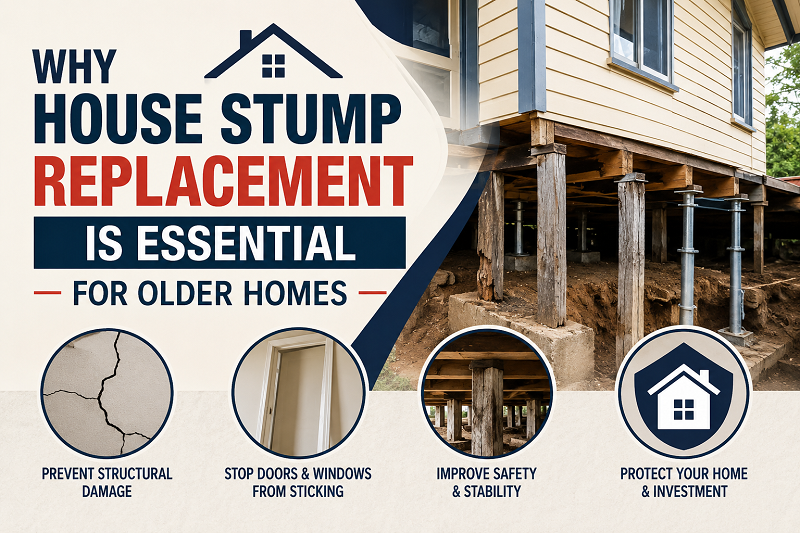
Have you ever noticed your floorboards creaking more than usual? Perhaps your doors have started sticking, or you’ve spotted mysterious cracks appearing in your walls? If you’re living in an older Australian home, these seemingly minor issues could be pointing to something far more serious happening beneath your feet.
The truth is, many of us rarely think about what’s holding our homes up. We focus on the visible stuff—the paint, the roof, the garden—while the foundation quietly does its job underground. But here’s the thing: the stumps supporting your home won’t last forever. For older properties, especially those built before the 1980s, stump deterioration is not just possible—it’s likely.
In this post, we’ll explore everything you need to know about house stump replacement. You’ll discover the warning signs that indicate your stumps need attention, understand the differences between timber and concrete options, and learn what happens if you ignore the problem. We’ll also break down the costs involved, explain why professional help is non-negotiable, and share tips to prevent future damage. Whether you’re a homeowner worried about your property or simply curious about what keeps Australian homes standing strong, this guide has you covered.
What Is House Stumping and Why Does It Matter?
Understanding the Role of Stumps in Older Properties
House stumps are the unsung heroes of Australian construction. These vertical posts sit beneath your home, transferring the weight of your entire structure down to the ground. Think of them as the legs your house stands on. Without properly functioning stumps, your home simply cannot maintain its structural integrity.
In older properties, stumps were typically made from hardwood timber. They were designed to elevate homes off the ground, providing ventilation and protection from moisture, pests, and flooding. This elevated design was particularly popular in Queensland and New South Wales, where the climate demanded airflow beneath dwellings.
Common Types of House Stumps in Australian Homes
You’ll find several stump varieties across Australian properties. Timber stumps, usually red gum or ironbark, were the standard choice for decades. Concrete stumps became increasingly popular from the 1950s onwards, offering improved durability. Steel stumps are the modern option, providing excellent longevity and resistance to termites and rot.
Each type has its own lifespan and vulnerabilities. Understanding what’s beneath your home is the first step toward proper maintenance.
Warning Signs Your Home Needs Stump Replacement
Visible Damage: Cracks, Rot, and Decay
One of the most obvious indicators of stump trouble is visible deterioration. If you can access the area beneath your home, take a close look at your stumps. Timber stumps showing signs of rot, splitting, or fungal growth are crying out for attention. Concrete stumps might display cracking or crumbling, while steel stumps could show rust or corrosion.
Uneven or Sloping Floors
Walking through your home shouldn’t feel like navigating a gentle hill. If you’ve noticed that floors seem uneven, or if marbles roll across the room on their own, your stumps may have shifted or deteriorated unevenly. This is particularly common in older homes where some stumps have degraded faster than others.
Doors and Windows That Stick or Won’t Close
When your foundation shifts, it affects everything above it. Doors that suddenly won’t latch properly, windows that jam, or frames that appear skewed are all red flags. These issues often worsen over time as the structural movement continues.
Gaps Between Walls and Ceilings
Have you spotted gaps appearing where your walls meet your ceilings or floors? This separation indicates that your home’s frame is moving—usually because the foundation beneath it is no longer level or stable.
How Long Do House Stumps Last?
Timber Stumps vs Concrete Stumps: Lifespan Comparison
Timber stumps typically last between 15 and 50 years, depending on the wood species and ground conditions. Hardwoods like red gum tend to outlast softer varieties. Concrete stumps offer improved durability, generally lasting 50 to 100 years when properly installed.
Steel stumps are the longest-lasting option, potentially serving your home for over a century. However, even the most durable materials eventually succumb to environmental factors.
Factors That Accelerate Stump Deterioration
Several conditions can dramatically shorten your stumps’ lifespan. Poor drainage that keeps soil constantly wet creates ideal conditions for rot and decay. Termite activity can devastate timber stumps in surprisingly short timeframes. Reactive soils that expand and contract with moisture levels place enormous stress on stumps, causing movement and cracking.
Tree roots growing beneath your home can also cause significant problems, shifting stumps and destabilising your foundation over time.
What Happens If You Ignore Damaged Stumps?
Structural Risks and Safety Concerns
Ignoring deteriorating stumps is genuinely dangerous. As stumps fail, your home’s weight becomes unevenly distributed. This creates stress points that can lead to serious structural damage—cracked walls, sagging floors, and in extreme cases, partial collapse.
The longer you wait, the worse and more expensive the problem becomes. What starts as a single failing stump can quickly affect neighbouring stumps as they compensate for the extra load.
Impact on Property Value and Insurance
Beyond safety concerns, damaged stumps significantly affect your property’s value. Potential buyers will either walk away or demand substantial price reductions when inspections reveal foundation problems.
Plus, many insurance policies won’t cover damage resulting from neglected maintenance issues like stump deterioration. You could find yourself facing massive repair bills with no financial safety net.
How Much Does House Restumping Cost in Australia?
Factors That Influence Restumping Prices
Restumping costs vary considerably based on several factors. The number of stumps needing replacement plays the biggest role—expect to pay between $500 and $1,000 per stump for straightforward replacements. Accessibility matters too; homes with limited clearance underneath require more labour-intensive approaches.
The type of replacement stump you choose affects pricing. Concrete stumps are typically more affordable than steel options. Your location also influences costs, with metropolitan areas often commanding higher prices than regional zones.
For a complete restump of an average three-bedroom home, you’re looking at anywhere from $10,000 to $30,000.
Is Restumping Worth the Investment?
Absolutely. When you consider the alternative—watching your home slowly deteriorate while its value plummets—restumping is a sound investment. It protects your biggest asset, ensures your family’s safety, and maintains your property’s market appeal.
Can You Replace House Stumps Yourself?
Why Professional Restumping Is Always Recommended
While DIY enthusiasm is admirable, restumping isn’t a weekend project. The process involves temporarily supporting your entire home while removing and replacing stumps—get this wrong, and the consequences are catastrophic.
Professional restumpers bring specialised equipment, engineering knowledge, and insurance coverage. They understand local soil conditions, council requirements, and proper installation techniques. This isn’t about lacking confidence in your abilities; it’s about acknowledging that some jobs genuinely require expert hands.
What to Expect During the Restumping Process
A typical restumping job takes several days to a couple of weeks, depending on your home’s size. The team will first assess all stumps and create a replacement plan. They’ll then use hydraulic jacks to lift sections of your home, remove damaged stumps, install new ones, and carefully lower your home back into position.
Reputable contractors will also re-level your floors and check that doors and windows function correctly before completing the job.
Choosing the Right Restumping Contractor
Questions to Ask Before Hiring
Before signing any contracts, ask potential contractors several key questions. Are they licensed and insured? Can they provide references from previous customers? What warranty do they offer on their work? Do they handle council permits if required?
A trustworthy contractor will happily answer these questions and provide written quotes detailing exactly what’s included.
Understanding Quotes and Timeframes
Get at least three quotes before making decisions. Be wary of significantly cheaper quotes—they often indicate shortcuts or hidden costs. Quality restumping takes time; anyone promising unrealistically fast completion times might be cutting corners.
How to Prevent Future Stump Damage
Drainage and Moisture Management Tips
Good drainage is your stumps’ best friend. Make sure your gutters direct water away from your home’s perimeter. Consider installing agricultural drains if water pools near your foundation. Keep garden beds and mulch away from direct contact with stumps.
Regular Inspection Schedules for Older Homes
Prevention beats cure every time. Schedule professional foundation inspections every two to three years for older homes. Between professional visits, do your own visual checks every six months, looking for the warning signs we’ve discussed.
Protecting Your Home’s Foundation for Generations
Your home’s stumps might be out of sight, but they should never be out of mind—especially if you’re living in an older Australian property. The warning signs of stump failure are there if you know what to look for: uneven floors, sticking doors, cracks in walls, and visible deterioration beneath the house.
Taking action early saves money, protects your investment, and keeps your family safe. While house stump replacement represents a significant expense, it’s infinitely preferable to dealing with catastrophic structural failure or watching your property’s value decline.
So, take a moment this weekend to check under your home if you can. Look at those stumps with fresh eyes. And if anything looks concerning, don’t hesitate to call in the professionals. Your home has sheltered you faithfully—now it’s your turn to look after it.