

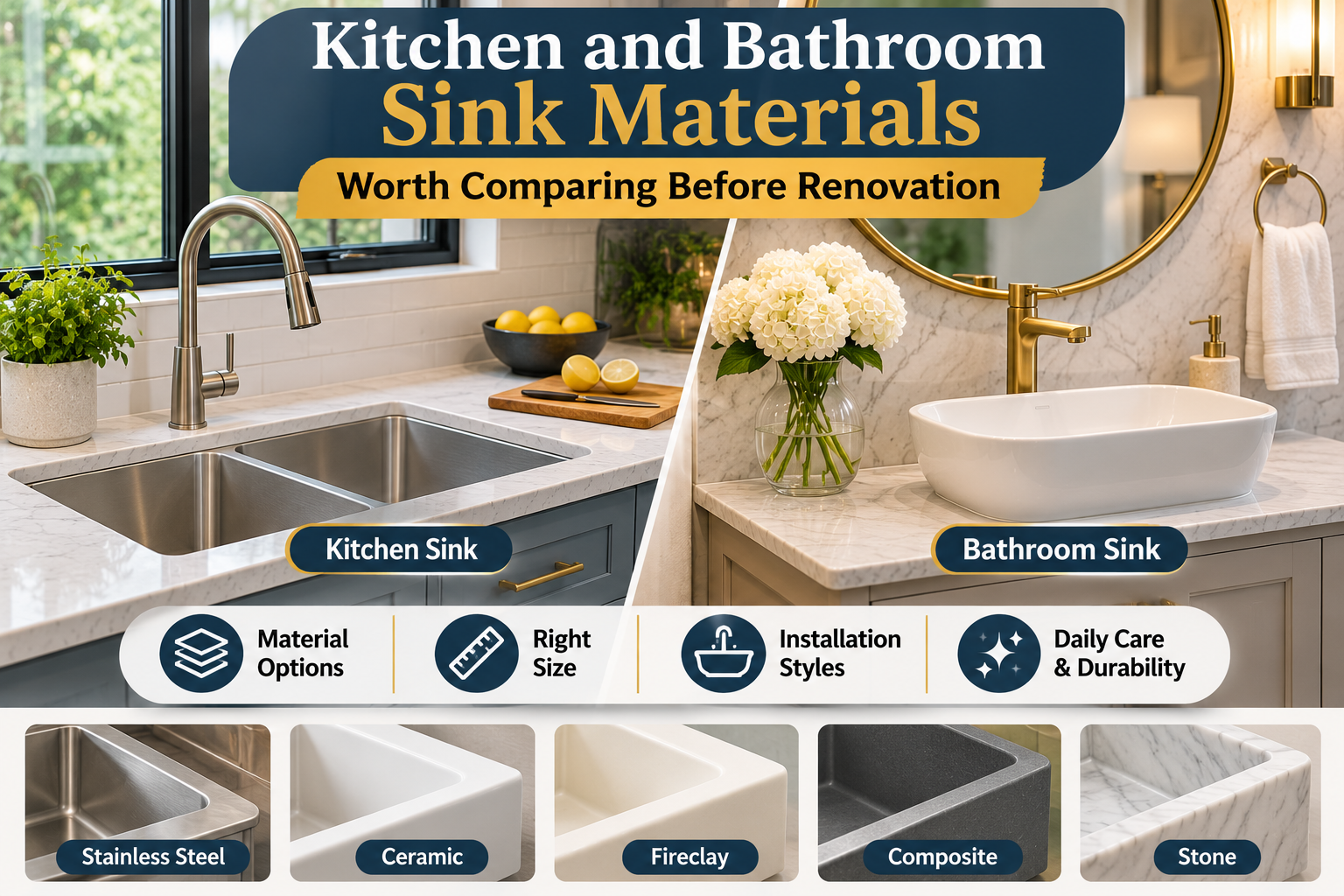
Choosing a sink may seem like a small decision during a kitchen or bathroom renovation. However, the sink affects cleaning, storage, countertop preparation, plumbing, and everyday comfort. Different materials also require different care. A sink that looks attractive in a showroom may not suit the household’s routines or available space. Therefore, we should compare material performance, bowl dimensions, installation types, and maintenance before buying.
Choose a Sink Based on Everyday Use
A kitchen sink supports food preparation, dishwashing, and cleanup. Meanwhile, a bathroom sink handles personal care and regular handwashing. Therefore, each space requires a different approach to size, style, and material. Comparing stainless steel kitchen sinks can help us understand practical bowl designs and finishes for cooking areas. However, we should also consider noise, surface maintenance, and cabinet dimensions rather than choosing only by appearance. For homeowners in Milwaukee, WI, United States, coordinating sink selection with countertop design can help prevent installation problems during renovation.
Understand Stainless Steel Sink Construction
Stainless steel is common in kitchens because it resists corrosion and comes in many sizes. However, product quality can vary according to steel thickness, construction, and sound-control features. Compare the full product specifications rather than focusing only on the advertised material.
Understand Steel Gauge
Stainless steel sinks come in different gauges. A lower gauge number generally indicates thicker steel. However, thickness alone does not determine every aspect of sink quality. We should also review bowl construction and installation details.
Consider Sound Control
Water and cookware can create noise against metal sinks. Therefore, some products include sound-dampening pads or coatings. However, the effectiveness varies. We should compare product specifications and practical needs.
Review Surface Finish
Brushed and satin finishes can create different appearances. However, stainless steel may still develop light scratches during use. We should consider how the finish complements nearby appliances and countertops.
Choose the Right Kitchen Sink Size
Sink size affects cooking and cleanup. However, choosing the largest possible bowl may reduce cabinet storage or surrounding counter space. Therefore, we should measure the sink base cabinet before purchasing.
Single-Bowl Sinks
A single bowl can provide uninterrupted space for large cookware. It may suit homeowners who regularly clean baking trays and pots. However, it does not provide separate washing areas.
Double-Bowl Sinks
Double-bowl sinks separate washing and rinsing tasks. However, the divider may make oversized cookware harder to handle. We should choose the arrangement that matches daily habits.
Deep Kitchen Sinks
A deep sink can hold larger items. However, it may feel uncomfortable for shorter users or reduce storage space below. We should compare bowl depth with the kitchen’s counter height and household needs.
Understand Sink Installation Styles
Installation affects the transition between the sink and countertop. Therefore, we should review the selected method before choosing materials.
Undermount Sinks
Undermount sinks attach beneath the countertop. This creates a smooth counter-to-sink transition and can make wiping crumbs easier. However, the sink needs suitable mechanical support, accurate cutouts, and proper sealing.
Drop-In Sinks
Drop-in sinks rest on the countertop with an exposed rim. They can suit several countertop and cabinet configurations. However, the rim may collect water or dirt during daily use.
Farmhouse Sinks
Farmhouse sinks feature an exposed front section. They can complement traditional or transitional kitchens. However, they may require a suitable cabinet design and careful countertop planning. We should confirm compatibility before ordering.
Select a Bathroom Sink That Fits the Vanity
Bathroom sinks often need to balance comfort, appearance, and storage. However, the best design depends on the room’s available space. Exploring bathroom vanity sinks can help us compare suitable sizes and installation styles. We should also consider faucet placement and the amount of countertop space available around the bowl.
Undermount Vanity Sinks
An undermount bathroom sink can create a smooth countertop edge. However, it requires a compatible surface and suitable mounting. We should also confirm the bowl dimensions before countertop fabrication.
Vessel Sinks
Vessel sinks sit above the countertop. They can provide a distinctive decorative appearance. However, the added bowl height influences faucet selection and everyday comfort. We should review the combined vanity and sink height.
Integrated Sink Options
Some manufactured vanity tops include integrated sinks. These can create a continuous appearance. However, available sizes, materials, and repair options vary by product. We should compare specifications with the bathroom layout.
Understand Sink Materials Beyond Stainless Steel
Different sink materials provide different appearances and maintenance needs. Therefore, we should compare more than one option before finalizing a renovation. Ceramic, fireclay, composite, and other products may suit particular kitchens or bathrooms. However, each has its own installation requirements.
Ceramic and Porcelain Sinks
Ceramic sinks often offer a smooth glazed surface. However, impacts can chip or crack certain products. We should compare suitability for kitchen and bathroom use rather than assume all ceramic sinks are identical.
Fireclay Sinks
Fireclay may provide a classic appearance. However, these sinks can be heavy and may require suitable cabinet support. We should confirm product dimensions and installation details.
Composite Sinks
Composite sink products may combine mineral content with binding materials. They can offer different colors and surface finishes. However, performance varies by manufacturer and formulation.
Consider Quartz Composite Sink Options
Homeowners comparing composite quartz sinks can explore material options beyond traditional stainless steel. These sinks often provide dense surfaces and a range of colors. However, heat resistance, stain behavior, and recommended cleaning methods vary by product. Therefore, manufacturer specifications should guide selection.
Match Sink Color With the Countertop
A dark composite sink can create contrast with a light countertop. Meanwhile, a neutral composite sink may provide a softer appearance. However, the chosen material should complement cabinets and faucets.
Review Daily Cleaning
Composite surfaces may resist many everyday marks, but they are not damage-proof. Therefore, we should clean regularly with approved products. Harsh chemicals and abrasive tools may affect certain finishes.
Consider Heat and Impact
Different composite products have different heat and impact limits. Therefore, we should review the selected manufacturer’s instructions before placing very hot cookware in the sink. We should also avoid striking the bowl with heavy objects.
Coordinate Kitchen Sinks With Countertops
Sink installation often depends on the countertop material. Therefore, stone fabrication and sink selection should happen together. Granite and engineered quartz can accommodate suitable undermount configurations. However, they require accurate openings, appropriate support, and proper installation.
Choose the Sink First
The fabricator needs the exact sink model before cutting the countertop. Therefore, we should finalize the purchase early. Changing sink specifications later can create fitting problems.
Plan Faucet Holes
Faucets and accessories may require holes in the countertop. However, their placement should avoid interference with the sink and backsplash. We should confirm the complete arrangement before fabrication.
Understand Bathroom Vanity Layouts
A bathroom vanity affects sink position, storage, and walking space. Therefore, we should choose sink dimensions according to the room.
Single-Sink Vanities
A single sink may provide additional countertop space. However, storage depends on cabinet dimensions and internal plumbing. We should compare usable drawer space before choosing.
Double-Sink Vanities
Double sinks can help two people use a bathroom at once. However, the vanity needs sufficient width and appropriate plumbing. We should confirm clearances before installation.
Review Sink Maintenance Requirements
Every sink needs regular care. However, cleaning methods vary by material. We should use suitable products and avoid unnecessary abrasives.
Prevent Water Marks
Some stainless finishes show water spots. Therefore, drying after cleaning may help maintain appearance. However, the exact result depends on water conditions and the sink finish.
Protect Sink Drains
Food waste and other debris can create plumbing problems. Therefore, suitable strainers may help prevent unwanted material from entering drains. We should also avoid pouring grease into the plumbing system.
Understand Sink Installation Costs
The sink purchase price may not include installation. Plumbing changes, countertop cutting, cabinet modifications, and disposal can influence the total budget. Therefore, we should request an estimate that identifies each major service.
Cabinet Adjustments
A deep or wide sink may require a different cabinet arrangement. However, not every replacement needs major modifications. We should check dimensions before making a purchase.
Plumbing Work
Different drain locations or faucet configurations may require plumbing adjustments. Therefore, installation responsibilities should be clear. We should ask whether reconnection forms part of the quote.
Compare Local Countertop and Sink Services
Homeowners researching countertops contractors in Milwaukee WI should consider experience with sink cutouts, countertop fabrication, and suitable mounting methods. However, a low quote may not include all related work. We should compare itemized proposals and confirm who handles plumbing. For homeowners in Milwaukee, WI, United States, coordinating countertop and sink decisions can make the project easier to plan.
Avoid Common Sink Buying Mistakes
One mistake is purchasing a sink without measuring the cabinet. Another is overlooking faucet clearance or countertop compatibility. Homeowners may also select a finish without understanding its cleaning needs. Therefore, we should review both appearance and practical requirements.
Final Thoughts
The right sink can make cooking, cleaning, and personal care more comfortable. However, the best material and installation style depend on the room’s dimensions and everyday use. For renovation projects in Milwaukee, WI, United States, we should compare sink specifications, countertop compatibility, and complete installation costs. Thoughtful planning can create a coordinated and practical result.
Frequently Asked Questions (FAQs)
1. What is the best sink material for kitchens and bathrooms?
The best sink material depends on daily use, maintenance preferences, and bathroom or kitchen design. Stainless steel is a practical choice for busy kitchens, while quartz composite offers color options and a modern appearance. Ceramic and porcelain sinks are popular for bathrooms because of their smooth glazed surfaces and classic designs.
2. Are quartz composite sinks better than stainless steel sinks?
Quartz composite and stainless steel sinks offer different advantages. Stainless steel is lightweight, corrosion-resistant, and practical for everyday kitchen tasks. Quartz composite provides a dense surface and various color options. However, heat resistance, scratch behavior, cleaning requirements, and installation costs vary by product.
3. What should homeowners consider before installing a new kitchen or bathroom sink?
Homeowners should check cabinet dimensions, countertop compatibility, sink depth, faucet placement, plumbing connections, and installation requirements. They should also compare undermount, drop-in, and farmhouse sink styles. Choosing the correct sink before countertop fabrication helps prevent fitting problems and unexpected installation expenses.