

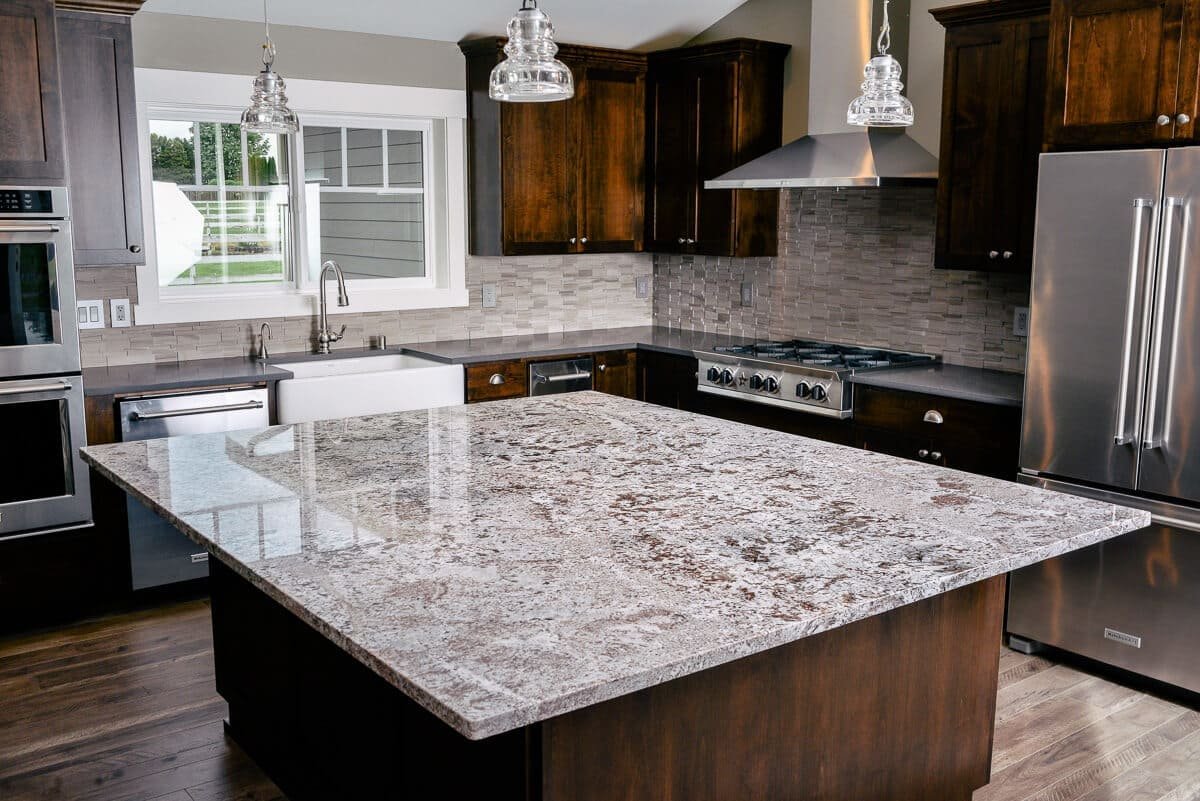
Quartzite is often selected for its strength, depth, and natural beauty. Some slabs have a calm background with gentle movement, while others contain bold veins, dramatic colors, and strong mineral patterns. These features give the stone its character, but they also make the selection process different from choosing a manufactured surface.
A small sample can provide a general idea of color. However, it cannot display the full personality of a large slab. The finished countertop may contain sections that look softer, darker, warmer, or more active than the sample suggests.
For this reason, selecting quartzite should involve more than matching a small piece with a cabinet door. The complete slab, kitchen layout, lighting, seam locations, edge profile, and fabrication plan must all be considered together.
Natural Variation Is Part of the Material
Quartzite develops through natural geological processes involving sandstone, heat, and pressure. As a result, its appearance is shaped by minerals and conditions found in the earth. The color may shift across the slab. Veins can change direction, widen, disappear, or meet other areas of movement. Small mineral deposits may create spots or lines that do not repeat anywhere else.
These features are not printed onto the surface. They extend through the stone and help make every slab different. That uniqueness is one of the main reasons people choose quartzite instead of a more uniform material. However, natural variation requires realistic expectations. Two slabs sold under the same name may not be exact matches. Even slabs cut from the same block can show noticeable differences in color and pattern.
A Small Sample Cannot Show the Complete Design
Countertop samples are useful when comparing general tones and finishes. Still, they represent only a tiny section of a much larger piece. A light sample might come from a quiet corner of a slab that contains several bold veins. Likewise, a highly patterned sample could make the complete material seem busier than it actually is.
Visiting a reliable countertop supplier allows you to view more of the material before making a decision. When possible, look at the full slab rather than relying only on photographs or small pieces. Stand back and view it from a distance. Then move closer to study the details. This helps you understand both its overall movement and its smaller features. It is also useful to view the slab from different angles. Polished surfaces reflect light, so the appearance may change as you move. A vein that looks soft from one direction may become more visible from another.
Color Variation Can Affect the Entire Kitchen
Quartzite is often chosen for its white, cream, gray, beige, green, blue, or gold tones. Yet natural stone rarely contains only one simple color. A slab that appears white at first may contain warm cream areas. A gray surface may reveal blue or green undertones. Gold, rust, or brown minerals may also appear in certain sections. These undertones matter because they influence how the countertop coordinates with cabinets, flooring, paint, hardware, and backsplash materials.
For example, a cool white cabinet may make a warm slab appear more yellow. A cream cabinet may look dull beside a stone with icy blue undertones. Neither combination is necessarily wrong, but the result may differ from what you expected.
Bring physical samples of the other finishes when viewing quartzite. Comparing everything under similar lighting makes it easier to identify undertones before fabrication begins.
Veining Should Be Planned Around the Layout
Strong veining can become one of the most attractive features of quartzite. However, its position within the finished kitchen depends on how the slab is cut. A fabricator may need to create openings for the sink, cooktop, faucet, or other fixtures. If these locations are not considered during slab layout, an important vein could be removed or divided in an awkward place.
For this reason, the layout should be reviewed before cutting begins. Decide whether the most dramatic movement should appear on the island, near the sink, along a visible wall, or across a waterfall edge. The direction of the pattern also matters. Long veins can make a narrow countertop appear longer. Movement that crosses the slab may draw attention toward the island or another important feature.
Careful layout planning turns natural variation into a design advantage. Without planning, the same variation may feel disconnected after installation.
Full-Slab Viewing Helps Set Realistic Expectations
When comparing natural quartzite countertops, look for areas of movement, color change, mineral concentration, and natural texture. Consider how each part may appear in the completed space. If the project requires more than one slab, view them together whenever possible. Slabs from the same bundle may have related movement, which can make pattern matching easier.
Still, exact continuity should not always be expected. Natural stone does not behave like printed wallpaper. A vein may not continue perfectly across every seam, especially when the layout contains corners, cutouts, or separate sections.
The goal is not to remove every difference. Instead, the goal is to arrange the material so its natural features feel balanced and intentional.
Understand Fissures and Other Natural Features
Quartzite may contain fine lines known as fissures. These can form naturally as the stone develops. They may look different from one slab to another and can be more visible under certain lighting. A natural fissure is not automatically the same as damage. However, cracks and structural concerns should be examined by a qualified professional. It can be difficult to judge the difference from a photograph alone.
Mineral deposits, pits, small surface variations, and changes in texture may also appear. Some people see these details as part of the stone’s authenticity, while others prefer a calmer and more consistent surface. Ask questions about anything that catches your attention before approving the slab. It is better to understand a natural feature during selection than to discover it after installation.
Bookmatching and Pattern Matching Need Extra Material
Some designs use two slabs positioned so their patterns reflect or flow into one another. This technique can create a dramatic feature wall, large island, or waterfall edge. However, pattern matching may require additional material and careful fabrication. It can also affect which parts of the slabs are used.
Not every quartzite design needs bookmatching. A quieter layout may look better when the movement flows in one general direction rather than creating a mirrored effect. The choice should support the room instead of being added only because it looks impressive in a photograph. Strong pattern matching can become overwhelming when combined with detailed cabinets, bold flooring, and a busy backsplash.
Lighting Changes How Quartzite Appears
Showroom lighting and kitchen lighting are rarely identical. A slab viewed under bright overhead fixtures may look different in a room with warm bulbs, limited daylight, or strong afternoon sun. Natural light can reveal subtle undertones and mineral details. Artificial lighting may soften them or make certain areas appear warmer.
If possible, take a sample into the room where the stone will be installed. View it during the morning, afternoon, and evening. Place it beside the cabinets and flooring instead of looking at it alone. Also consider under-cabinet lighting. This light falls directly across the countertop and may highlight texture, movement, or surface reflection.
USA Marble & Granite can be part of the material-selection process when you need to compare quartzite options with the other finishes planned for the kitchen or bathroom.
Seams Are More Noticeable in Active Patterns
The location and appearance of seams depend on slab size, room access, cabinet layout, and the direction of the pattern. A quiet surface may hide a seam more easily than a slab with strong veining. When movement changes suddenly from one section to another, the join can become more visible.
Discuss seam placement before fabrication. In some cases, placing a seam near a sink or corner may make it less noticeable. In other layouts, a different position may create better pattern flow. It is important to understand that natural stone patterns cannot always be matched perfectly. Skilled planning can improve the result, but the final surface will still show the individual nature of the material.
Edge Profiles Can Highlight or Hide Variation
The edge profile affects how much of the stone’s thickness and internal pattern can be seen.
A simple eased edge keeps attention on the top surface and works well with strong veining. A thicker or built-up edge can create a heavier appearance and may reveal more variation along the front.
Decorative profiles may suit traditional interiors, but they can compete with a highly active slab. Simpler edges often allow dramatic quartzite to remain the main visual feature.
The position of veins near the edge should also be reviewed. Certain cuts may bring interesting color movement down the side, especially on waterfall islands.
Accepting Variation Leads to a Better Selection
Quartzite is not the right choice for someone who expects perfect repetition or complete color consistency. Its value comes from natural differences. Before purchasing, decide how much movement you enjoy. Some slabs are calm and subtle, while others are expressive and dramatic. Looking at several options helps you understand which level of variation feels comfortable.
Do not select a highly active slab because it is popular if you normally prefer quiet interiors. Likewise, do not choose a plain design when you want the countertop to become the main feature. A successful selection reflects personal taste as well as the character of the room.
Conclusion
Natural variation is one of the qualities that makes quartzite special. It creates unique color changes, veins, mineral patterns, and movement that cannot be exactly copied. However, these differences must be understood before the material is fabricated. Viewing the full slab, studying its undertones, planning the pattern, reviewing seam locations, and checking the material under different lighting can prevent disappointment.
When natural features are treated as part of the design rather than unexpected flaws, quartzite can become a lasting and distinctive element in a kitchen or bathroom.