

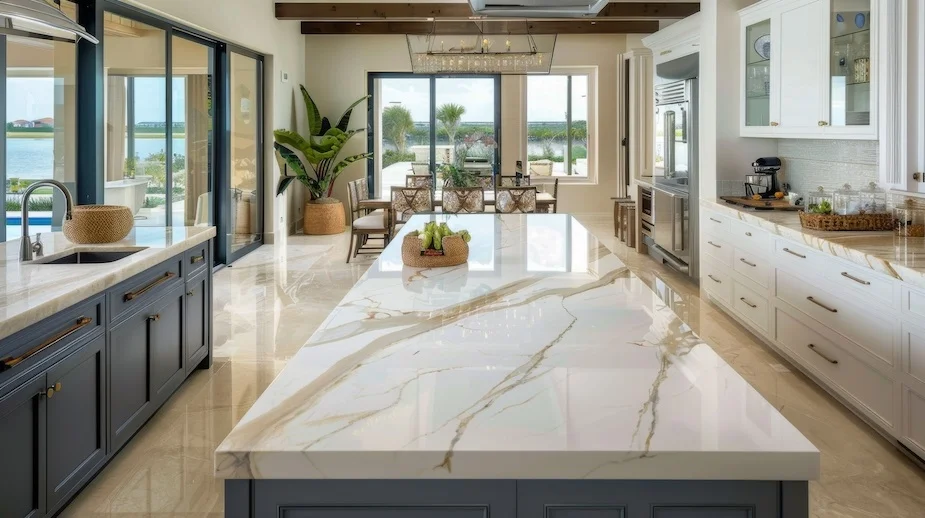
A kitchen can feel dated even when its cabinets still work well. Sometimes the problem is a countertop color that clashes with the flooring. Other times, several busy patterns compete across the room. Changing the surface can bring the design together, but choosing the most dramatic option does not always create the best result.
This year’s countertop inspiration offers plenty of room for personal choice. Warm shades, expressive stone patterns, and softer finishes provide different ways to update a kitchen. However, each idea needs to work with the cabinets, lighting, and layout you already have or plan to install.
The most useful trending in kitchen countertop design give you a starting point for those decisions. Rather than copying an entire showroom, choose the detail that improves your room. A warmer background, a contrasting island, or a simpler backsplash may be enough to create the change you want.
Warm Neutrals That Connect the Room
Cream, beige, and soft taupe offer an alternative to cool gray surfaces. These shades can work particularly well beside wood cabinets, warm white paint, and brushed metal fixtures. They also give you room to introduce color through furniture or accessories.
The challenge is choosing the right undertone. A creamy countertop may look yellow beside a cool white cabinet door, while a gray-beige surface could appear dull against warm flooring. Therefore, compare the actual materials together before approving the stone.
Photographs of Maryland kitchen countertop projects can help you study these combinations in context. Look at the relationship between the counter, cabinet doors, and floor rather than focusing only on the stone. Then, recreate that comparison with samples from your own renovation.
An Island With Its Own Identity
The island does not have to repeat every perimeter finish. A different countertop can make it feel like a distinct part of the kitchen while still supporting the overall design. This approach works best when there is a clear reason for the contrast.
For example, a softly patterned perimeter can leave room for a more expressive island slab. Alternatively, a darker island surface can add depth to a light kitchen. The materials do not need identical colors, but they should share enough warmth or tone to feel comfortable together.
Keep the Contrast Focused
If the island has strong veining, consider quieter surrounding surfaces. A patterned backsplash, heavily textured floor, and dramatic island can create more visual activity than the room needs.
Also, view the materials side by side. Two samples may look attractive separately and still clash when placed together.
Let the Layout Guide the Choice
An island with generous open space around it can display a broad stone pattern. However, a compact island crowded with a sink, outlets, and daily essentials may show less of the slab.
Choose the surface for the part you will actually see, including the edges and seating side.
Veining Used as a Design Feature
Strong veining can give a kitchen a clear focal point. Instead of adding several decorative finishes, you can let the countertop provide the main pattern. This can suit a room with simple cabinetry and restrained hardware.
However, the pattern needs room to make sense. A broad diagonal vein may look appealing across an island but appear fragmented along narrow sections beside a stove. Consequently, selecting the slab and planning the cuts should happen together.
Ask the fabricator how the proposed countertop sections will sit within the material. Discuss seam locations and changes in pattern direction before fabrication. This conversation is especially useful when you have chosen the stone mainly for its movement.
For a Maryland kitchen renovation, take your layout to the material-selection appointment. A full slab can look very different from the finished pieces, and understanding that difference helps prevent disappointment.
The Countertop Continuing Up the Wall
A slab backsplash carries the countertop material onto the wall. Depending on the layout, it can create a continuous backdrop behind the sink or cooking area. It also reduces the number of separate materials you need to coordinate.
This idea can look restrained with a quiet surface or expressive with pronounced veining. However, it does not automatically suit every kitchen. Window positions, outlets, cabinets, and ventilation equipment all influence how the wall sections will look.
Before choosing a full-height slab backsplash, discuss these details:
- Where the material will begin and end.
- How the fabricator will arrange joints.
- Which outlet and fixture openings are necessary.
- Whether the existing wall needs preparation.
- How much additional material and labor the design requires.
A shorter backsplash or tile alternative may suit the room and budget better. Compare the complete options rather than assuming the largest stone application will create the strongest design.
Softer Finishes With Less Reflection
A glossy countertop reflects light and can emphasize a stone’s colors. However, a honed or textured finish offers a different effect. These surfaces can suit a kitchen where you want the material to feel quieter or more tactile.
The finish also changes how you notice fingerprints, water marks, and everyday wear. Those effects vary by material, color, and treatment, so avoid choosing from appearance alone. A dark matte surface and a pale matte surface may behave differently in daily use.
Ask for the Exact Material and Finish
A polished sample cannot fully represent a honed countertop. Request a suitable sample or finished display so you can see what you intend to purchase.
Also, ask for the care instructions for that specific surface. A less reflective appearance does not necessarily mean less maintenance.
For a kitchen with strong daylight, inspect the sample near a window as well as under artificial light. Side lighting can reveal surface details that are less obvious beneath showroom fixtures.
Edges That Suit the Cabinetry
The edge profile may seem like a small finishing choice, yet it affects the countertop’s overall character. A simple eased edge can complement plain cabinet doors. Meanwhile, a more detailed profile may suit traditional cabinetry when the surrounding design supports it.
Thickness changes the impression too. A substantial-looking edge can give an island more visual weight, while a slimmer appearance may suit a compact kitchen. However, the visible edge and the actual slab thickness are not always the same thing.
Ask the fabricator how the proposed detail will be made. Built-up edges, joints, and special profiles can affect both appearance and cost. Seeing a finished sample helps you understand the result more clearly than a profile name alone.
Around walkways and seating, discuss corners as well as the edge. The design should feel comfortable to use, especially where people regularly pass or sit.
Turn Inspiration Into One Coherent Plan
A successful update usually starts with choosing which surface deserves attention. If the countertop provides the main pattern, the backsplash can support it quietly. If the cabinets already feature a bold color or detailed doors, a calmer counter may bring balance.
Consider a hypothetical kitchen with honey-toned flooring and warm white cabinets. A cool, high-contrast countertop might feel disconnected from those finishes. A warmer surface with gentle movement could create a more coordinated result without changing the cabinets or floor.
By contrast, a kitchen with plain doors and neutral flooring may have room for an expressive island. The right decision comes from the existing room, not from using every appealing idea at once.
Bring that thinking to a consultation with USA Marble & Granite. Share cabinet samples, room photographs, and the details you want to improve. For a Maryland project, confirm service availability for your address and ask to compare suitable materials within your budget.
Before making the final selection, check the design against everyday needs. Think about food preparation, cleaning, heat protection, and the care each material requires. A countertop should remain enjoyable when the kitchen is busy and the styling accessories are gone.
Conclusion
Warm colors, contrasting islands, expressive veining, and softer finishes offer several ways to refresh a kitchen. You do not need to combine them all. One well-chosen detail can bring more balance than several competing features. Start with the room’s existing finishes, compare actual samples, and review the fabrication plan. Then, choose a surface whose appearance and care requirements fit your life. That gives the update a purpose beyond following a passing style.