

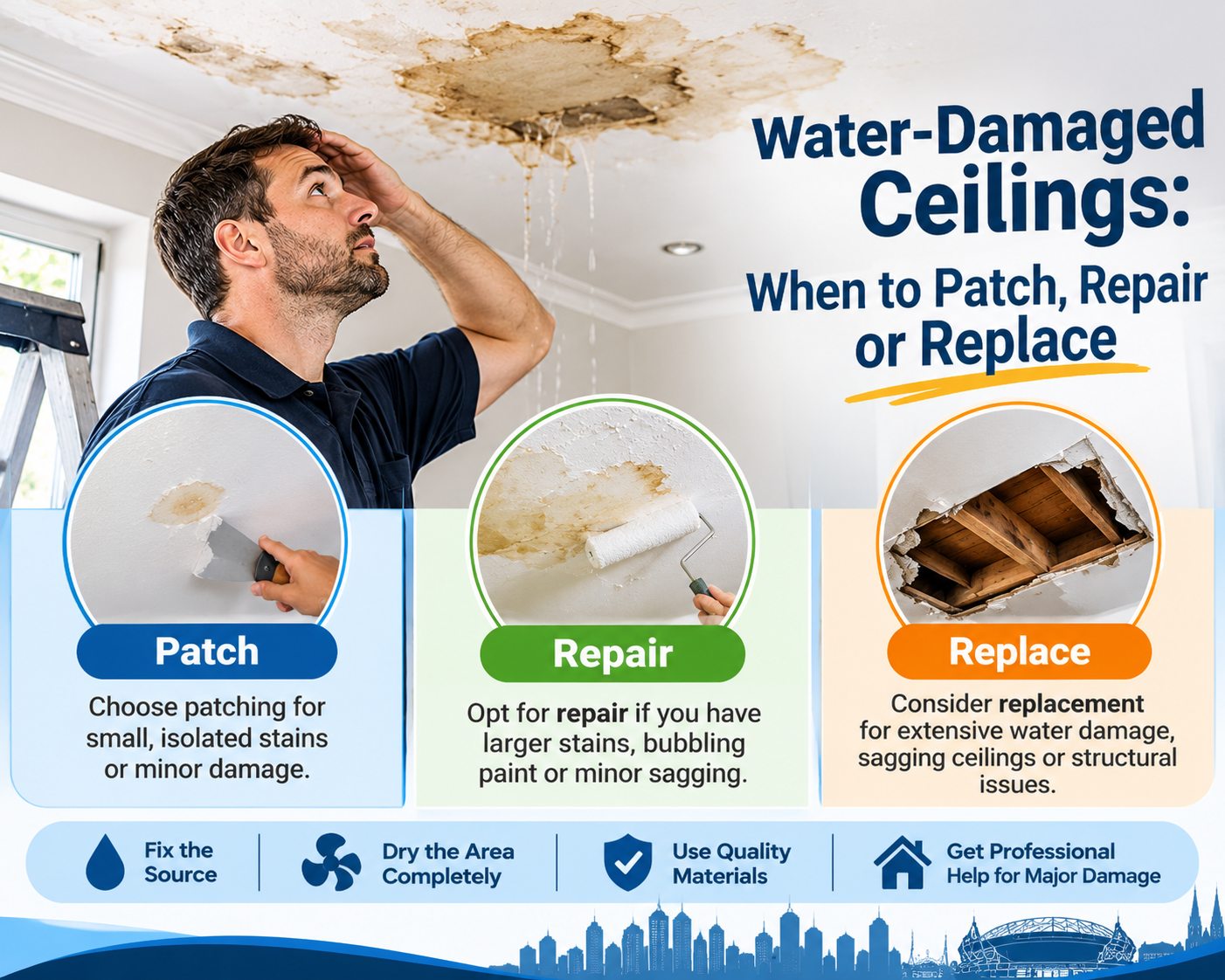
Have you noticed an unsightly brown stain spreading across your ceiling? Perhaps you’ve spotted paint bubbling or peeling in one corner of the room? Maybe you’ve even heard that dreaded dripping sound coming from above? Water damage to ceilings is one of those household problems that can range from a minor cosmetic issue to a serious structural concern – and knowing the difference is absolutely crucial.
Water-damaged ceilings are more common than you might think, particularly in Australian homes where we experience everything from tropical storms to burst pipes during those scorching summer months. The tricky part isn’t just spotting the damage – it’s figuring out whether you need a simple patch job, a more extensive repair, or a complete ceiling replacement. Get it wrong, and you could be facing mould problems, structural issues, or even a ceiling collapse.
In this guide, we’ll walk you through everything you need to know about dealing with water-damaged ceilings. You’ll learn how to identify the signs of water damage, assess how serious the problem is, and make an informed decision about the best course of action for your home and budget. Plus, we’ll cover costs, DIY options, and prevention tips to help you avoid future headaches. Let’s get stuck into it.
What Causes Water Damage to Ceilings?
Understanding what’s causing your ceiling damage is the first step towards fixing it properly. After all, there’s no point repairing the ceiling if you haven’t addressed the source of the water.
Roof Leaks and Storm Damage
Australia’s wild weather can be brutal on roofs. Cracked tiles, damaged flashing, or blocked gutters can all allow water to seep through during heavy rain. Storm damage is particularly common in areas prone to cyclones or severe thunderstorms, and even a small gap can lead to significant ceiling damage over time. Timely ceiling repair helps prevent further water damage, protects your home’s structure, and keeps your indoor spaces safe and comfortable.
Burst or Leaking Pipes
Pipes running through your ceiling cavity can spring leaks or burst entirely, especially older copper or galvanised steel pipes. This type of damage often appears suddenly and can cause substantial water accumulation before you even notice something’s wrong.
Bathroom and Kitchen Overflow
Overflowing bathtubs, blocked toilets, or leaking dishwashers in upper-storey rooms can quickly damage the ceiling below. These incidents often happen when you’re not home, giving water plenty of time to soak through.
Condensation and Poor Ventilation
In humid climates, poor ventilation can cause condensation to build up in ceiling cavities. Over time, this moisture damages plasterboard and creates the perfect environment for mould growth.
How Do I Know If My Ceiling Has Water Damage?
Visible Signs of Water Damage
The most obvious indicators include brown or yellowish stains, peeling or bubbling paint, and sagging or warped ceiling sections. You might also notice water dripping through light fixtures or damp patches that seem to grow larger over time.
Hidden Warning Signs You Shouldn’t Ignore
Sometimes water damage isn’t immediately visible. Musty odours, increased humidity in certain rooms, or unexplained spikes in your water bill can all point to hidden leaks. Paint that seems slightly discoloured or texture that looks different from the surrounding area might indicate water damage beneath the surface.
How to Tell If Water Damage Is Old or New
Fresh water damage typically appears as a darker, wet stain that’s still damp to the touch. Old damage tends to be lighter in colour, completely dry, and may have developed a crusty or flaky texture. Knowing the difference helps you determine whether the leak is ongoing or was a one-off incident.
Is a Water-Damaged Ceiling Dangerous?
Structural Risks and Ceiling Collapse
Waterlogged plasterboard becomes incredibly heavy and loses its structural integrity. A severely damaged ceiling can collapse without warning, posing serious injury risks to anyone below. If your ceiling is visibly sagging or feels spongy when touched, evacuate the area immediately and seek professional ceiling repair services to assess the damage and restore the ceiling’s safety and stability.
Mould and Health Concerns
Mould can begin growing within 24 to 48 hours of water exposure. Beyond being unsightly, mould releases spores that can trigger respiratory problems, allergies, and other health issues – particularly concerning for children, elderly family members, or anyone with existing health conditions.
Electrical Hazards
Water and electricity are a dangerous combination. If water has reached your ceiling lights, fans, or electrical wiring, you’re dealing with a potential fire or electrocution risk. Turn off power to affected areas and call an electrician before attempting any repairs.
Assessing the Extent of Ceiling Water Damage
DIY Inspection Tips
Start by examining the stained area carefully. Press gently on the ceiling – if it feels soft or spongy, the damage has penetrated deeply. Check the attic or roof cavity above if accessible, looking for wet insulation, water trails, or visible leaks. Document everything with photos for insurance purposes.
When to Call a Professional for Assessment
If the damaged area is larger than about 30 centimetres across, if you suspect mould growth, or if you can’t identify the water source, it’s time to bring in an expert. Professional assessors have moisture meters and thermal imaging equipment that can detect hidden damage you’d never spot yourself.
Can a Water-Damaged Ceiling Be Repaired?
When Patching Is Sufficient
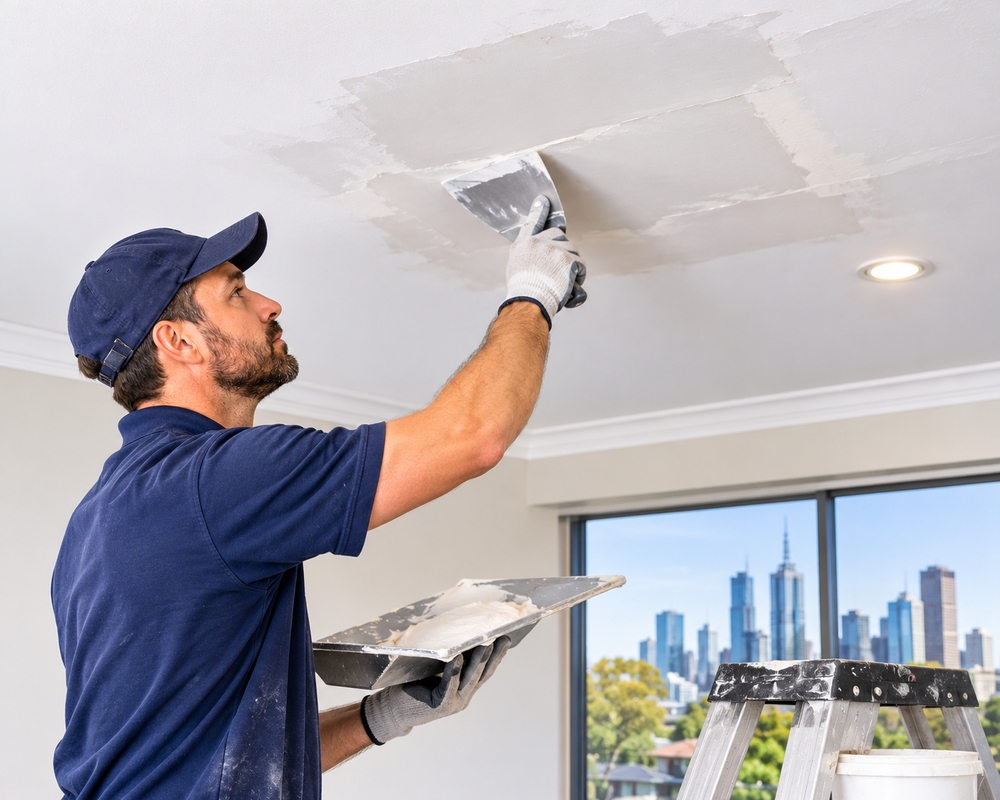
Minor staining from a one-off leak that’s been fixed can often be addressed with patching. If the plasterboard is still structurally sound – meaning it’s dried out completely and hasn’t warped or crumbled – you may only need to seal the stain and repaint.
When Full Repairs Are Necessary
More extensive damage requires cutting out the affected sections and replacing them with new plasterboard. This is typically necessary when the damage covers a larger area, when there’s evidence of mould, or when the ceiling material has been compromised but the supporting framework is still intact.
When Complete Replacement Is the Only Option
If water damage has affected the ceiling joists or structural supports, or if the damage is widespread throughout the ceiling, complete replacement is your safest option. This is also recommended when mould contamination is severe or when repeated water damage has weakened the entire ceiling structure.
How Much Does It Cost to Fix a Water-Damaged Ceiling in Australia?
Average Repair Costs
Minor patching and repainting typically costs between $150 and $400. More substantial repairs involving plasterboard replacement generally range from $500 to $1,500. Complete ceiling replacement can cost anywhere from $2,000 to $5,000 or more, depending on the size of the area and complexity of the job.
Factors That Affect Pricing
Several elements influence the final cost: the size of the damaged area, ceiling height and accessibility, whether structural repairs are needed, mould remediation requirements, and your location. Tradespeople in metropolitan areas often charge more than those in regional towns.
Does Insurance Cover Water-Damaged Ceilings?
Most home insurance policies cover sudden and accidental water damage – think burst pipes or storm damage. However, damage resulting from poor maintenance or gradual deterioration is typically excluded. Check your policy wording and document the damage thoroughly before making a claim.
DIY vs Professional Ceiling Repairs
What Repairs Can You Do Yourself?
Handy homeowners can often tackle small patches, stain sealing, and repainting themselves. If the damaged area is small, the plasterboard is still solid, and there’s no mould present, a DIY approach can save you money. You’ll need proper safety equipment, quality materials, and a weekend to complete the job.
Why Professional Repairs Are Often Worth It
Ceiling work requires skill to achieve a seamless finish, and professionals can spot issues you might miss. They’ll also ensure repairs meet building codes and can provide warranties on their work. For anything involving structural damage, mould, or electrical concerns, professional help isn’t just recommended – it’s essential.
Preventing Future Water Damage to Your Ceiling
Regular Maintenance Tips
Prevention beats cure every time. Inspect your roof annually, clear gutters regularly, and check pipes for signs of corrosion or leaks. Ensure bathrooms and kitchens have adequate ventilation, and address any small leaks immediately before they become major problems.
Early Warning Systems and Leak Detection
Consider installing water leak detectors near potential problem areas. These affordable devices alert you to moisture before significant damage occurs. Smart home systems can even shut off your water supply automatically when a leak is detected.
Making the Right Decision for Your Home
Dealing with a water-damaged ceiling isn’t anyone’s idea of fun, but addressing the problem promptly can save you significant money and stress down the track. The key is accurately assessing the extent of the damage and choosing the appropriate response – whether that’s a simple patch, a partial repair, or a complete replacement.
Remember, your safety comes first. If you’re unsure about the severity of the damage, or if there’s any possibility of mould or structural compromise, don’t hesitate to call in a professional. The cost of an expert assessment is minimal compared to the potential consequences of getting it wrong.
Finally, once your ceiling is repaired, put some preventive measures in place. Regular maintenance and early detection can help you avoid going through this process again. Your ceiling protects everything below it – make sure you’re protecting it in return.