

Have you noticed your doors sticking lately? Are your floors feeling a bit bouncy underfoot? Perhaps you’ve spotted some concerning cracks creeping across your walls? If you own an older home in Australia, these signs might be telling you something important about what’s happening beneath your feet.
Your home’s foundation is quite literally the backbone of your property. For many older Australian homes, this foundation consists of timber stumps that have been quietly doing their job for decades. But here’s the thing – nothing lasts forever, and those original stumps may be reaching the end of their lifespan. When they start to fail, your entire home feels the effects.
What Is Reblocking and How Does It Work?
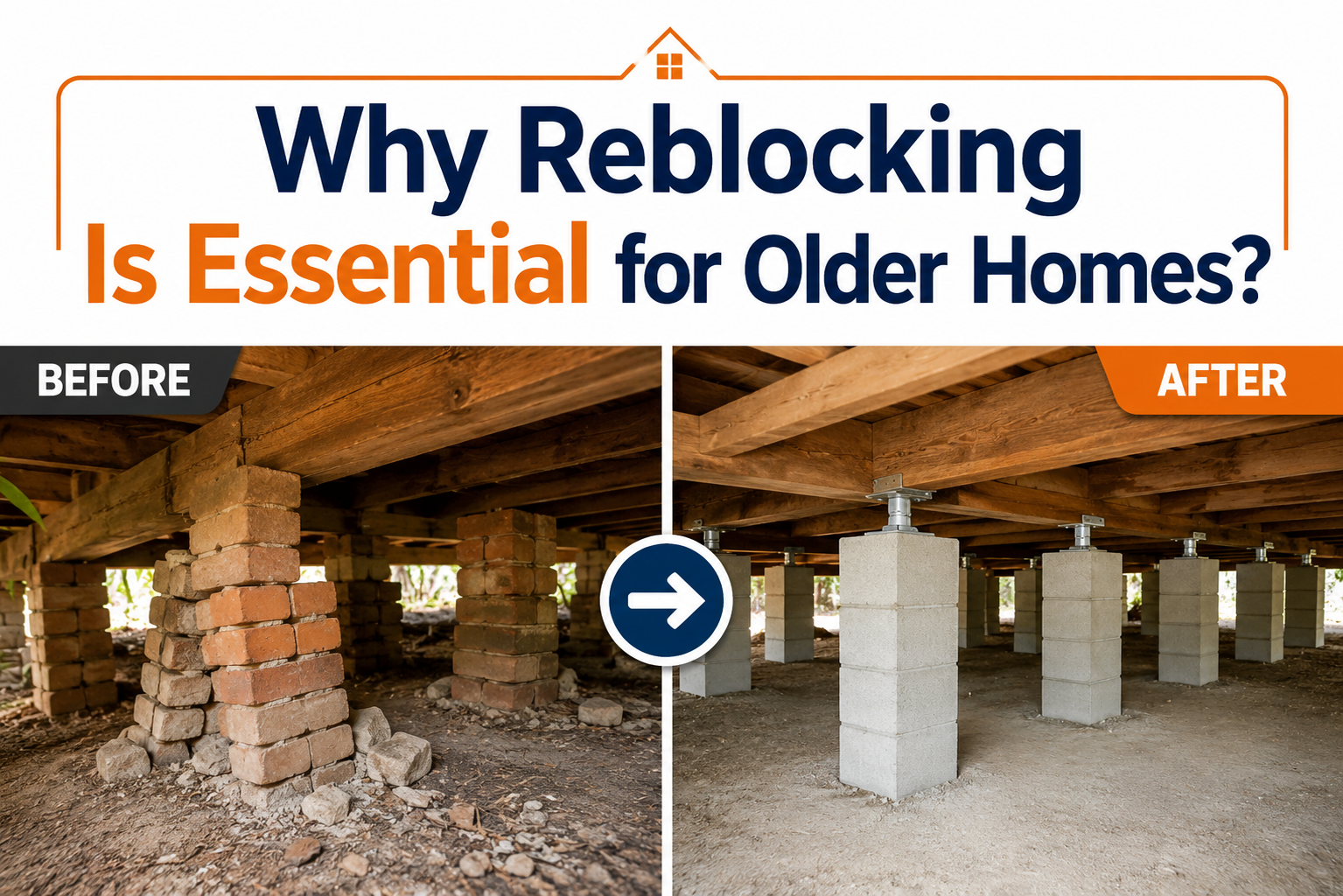
Reblocking is the process of replacing old, damaged stumps beneath your home with new, more durable ones. Think of it as giving your house a brand new set of legs to stand on. It’s a critical maintenance task for homes built on stump foundations, particularly those constructed before the 1980s.
The Reblocking Process Explained Step-by-Step
The process typically begins with a thorough inspection of your existing stumps. A qualified contractor will assess which stumps need replacing and the overall condition of your foundation. From there, temporary supports are installed to safely hold your home while the old stumps are removed.
Next, the damaged stumps are taken out one section at a time. New stumps – usually concrete or steel – are then installed and precisely levelled. This levelling process is crucial, as it can actually correct any unevenness that has developed over the years. Finally, the temporary supports are removed, and your home settles onto its new foundation.
Restumping vs Reblocking: Is There a Difference?
You might hear these terms used interchangeably, and that’s because they essentially mean the same thing. Both refer to replacing old stumps with new ones. Some contractors prefer one term over the other, but don’t let the terminology confuse you – it’s the same job.
Why Do Older Homes Need Reblocking?
Older homes face unique challenges when it comes to foundation stability. Understanding these issues helps you appreciate why reblocking becomes necessary over time.
The Problem with Original Timber Stumps
Most Australian homes built before the 1980s sit on timber stumps, typically red gum or similar hardwoods. While these timbers are remarkably durable, they’re not invincible. Over 40-60 years, even the toughest timber succumbs to rot, termite damage, and general deterioration. The stumps gradually weaken, causing your home to shift and settle unevenly.
How Australian Soil Conditions Affect Your Foundation?
Australian soil is notoriously reactive. Clay soils, common across Melbourne, Sydney, and other major cities, expand when wet and contract when dry. This constant movement places enormous stress on stumps and foundations. Seasonal changes can cause soil to shift by several centimetres, gradually loosening stumps from their original positions.
Signs of Foundation Movement in Heritage Properties
Heritage homes often show subtle signs of foundation distress before major problems develop. Keep an eye out for slight slopes in flooring, minor gaps appearing between walls and ceilings, or windows that suddenly become difficult to operate. These early warnings shouldn’t be ignored.
Warning Signs Your Home Needs Reblocking
Recognising the signs early can save you significant money and hassle down the track. Here’s what to look for.
How Do I Know If My House Needs Restumping?
The most reliable way is to have a professional inspection. However, several telltale signs suggest it’s time to call in the experts.
Visible Cracks in Walls and Ceilings
Cracks appearing in plaster, particularly around door frames and windows, often indicate foundation movement. Diagonal cracks are especially concerning, as they suggest differential settlement – meaning different parts of your home are sinking at different rates.
Uneven or Bouncy Floors
Walk across your floors and pay attention. Do they feel springy? Can you see a visible slope? Place a marble on the floor – if it rolls consistently in one direction, your stumps may be failing. Bouncy floors suggest the bearers and joists have lost proper support.
Doors and Windows That Stick or Won’t Close Properly
When stumps deteriorate unevenly, your home’s frame becomes twisted. This distortion affects door and window frames, making them difficult to operate. If multiple doors throughout your home are suddenly sticking, it’s likely a foundation issue rather than humidity or simple wear.
What Happens If You Ignore Foundation Problems?
Putting off reblocking might seem like a way to save money, but this approach typically backfires.
Structural Damage and Safety Risks
Left unaddressed, foundation problems worsen rapidly. Walls can crack severely, roof lines become distorted, and in extreme cases, structural collapse becomes a real possibility. The safety of your family shouldn’t be compromised by delaying necessary repairs.
Impact on Property Value
Buyers and their building inspectors will identify foundation issues quickly. Unresolved stump problems can significantly reduce your property’s value and make selling extremely difficult. Many buyers will simply walk away from homes with foundation concerns.
Increased Repair Costs Over Time
What starts as a few damaged stumps can escalate into a much larger project. As your home continues to shift, additional damage occurs to floors, walls, plumbing, and electrical systems. Early intervention is almost always cheaper than waiting.
How Much Does Reblocking Cost in Australia?
Understanding the financial side helps you plan appropriately for this essential work.
Factors That Influence Reblocking Prices
Costs vary considerably based on several factors:
- Number of stumps requiring replacement
- Accessibility beneath your home
- Type of replacement stumps chosen
- Your location within Australia
- Extent of levelling required
On average, expect to pay between $500 and $800 per stump, though this can vary significantly. A complete reblock of an average-sized home typically ranges from $10,000 to $25,000.
Is Reblocking Worth the Investment?
Absolutely. Beyond protecting your family’s safety, reblocking preserves your property’s value and prevents far more expensive repairs down the line. It’s an investment in your home’s future, not simply an expense.
How Long Does Reblocking Take?
Knowing the timeline helps you plan around this essential work.
What to Expect During the Process
Most reblocking projects take between three to five days for an average-sized home. Larger properties or those with extensive damage may require longer. Your contractor should provide a realistic timeframe based on your specific situation.
Can You Live in Your Home During Reblocking?
In most cases, yes. The work happens beneath your home, so daily life can largely continue as normal. You might experience some noise and vibration, and certain areas may have restricted access temporarily. Many homeowners simply carry on with their usual routines during the process.
Choosing the Right Materials: Concrete vs Steel Stumps
The materials you choose will affect your home’s foundation for decades to come.
Which Option Lasts Longer?
Both concrete and steel stumps significantly outlast timber, often lasting 50+ years with proper installation. Steel stumps, particularly galvanised options, offer exceptional durability and are highly resistant to both moisture and termites.
Best Stump Materials for Australian Conditions
For most Australian homes, galvanised steel stumps represent the best long-term value. They’re adjustable, incredibly strong, and virtually immune to the common enemies of timber stumps. Concrete stumps remain popular and cost-effective, though they lack the adjustability of steel.
How to Choose a Reliable Reblocking Contractor
Finding the right professional makes all the difference to your project’s success.
Questions to Ask Before Hiring
Before signing any contracts, ask potential contractors about their experience with homes similar to yours. Request references from recent projects and enquire about their warranty provisions. A reputable contractor will happily answer these questions.
Licensing and Insurance Requirements
Ensure your chosen contractor holds appropriate licensing for structural work in your state. Public liability insurance and workers’ compensation coverage are non-negotiable. Don’t hesitate to request proof of these credentials before work commences.
Protecting Your Home for Future Generations
Reblocking isn’t just about fixing a current problem – it’s about safeguarding your home for decades to come. By replacing failing stumps with modern, durable materials, you’re essentially giving your older home a new lease on life. The investment in reblocking protects your family, preserves your property’s value, and prevents far more costly repairs down the track.
If you’ve noticed any warning signs we’ve discussed – bouncy floors, sticking doors, or mysterious cracks – it’s worth having your stumps inspected sooner rather than later. Early intervention is almost always more affordable and less disruptive than waiting until problems become severe.