

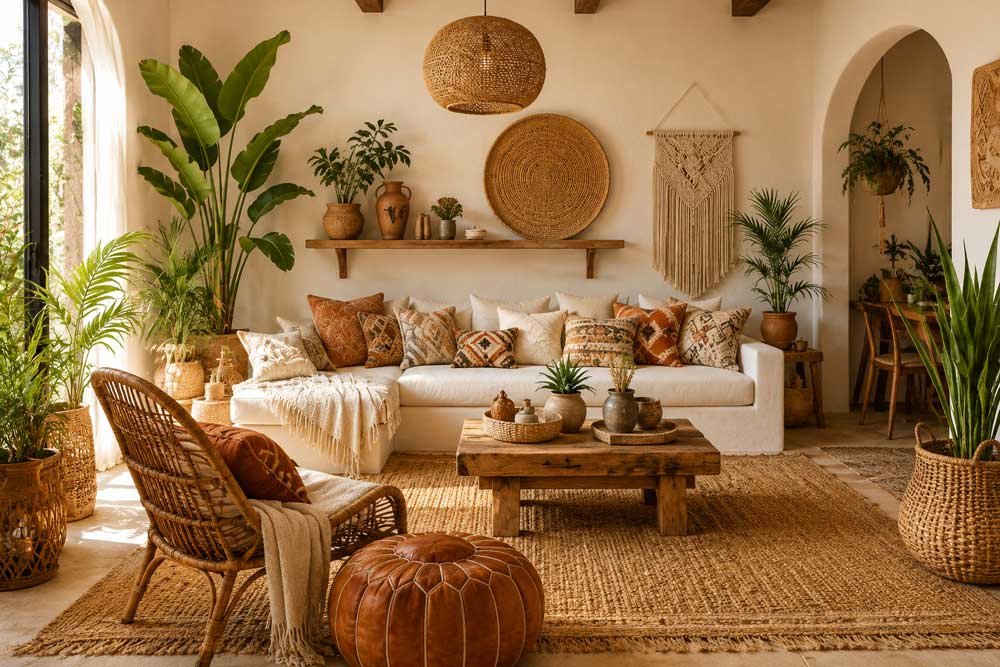
If you love interiors that feel warm, relaxed, creative, and full of personality, boho chic interior design could be the perfect style for your home. Unlike highly structured interior styles where everything needs to match, boho design celebrates individuality, layered textures, natural materials, handmade details, and objects that tell a story.
Also known as bohemian interior design, this style has become a popular choice for homeowners who want a home that feels comfortable rather than overly formal. From earthy living rooms and cozy bedrooms to plant-filled balconies and eclectic dining spaces, boho interiors can work beautifully in almost any room.
The best part? You don’t need to completely renovate your home to create a boho-inspired space. A few carefully selected rugs, cushions, plants, natural materials, vintage pieces, and warm lighting can make a dramatic difference.
So, how do you create the look without making your home feel cluttered? Here are some of the best boho interior design ideas to inspire your next makeover.
What Is Boho Chic Interior Design?
Boho chic interior design combines the relaxed, free-spirited character of traditional bohemian décor with a more polished and contemporary aesthetic.
Traditional bohemian interiors often use bold colors, multiple patterns, vintage furniture, textiles, plants, and collected objects. Boho chic keeps those expressive qualities but introduces more balance through neutral backgrounds, sophisticated furniture, carefully selected accessories, and cohesive color palettes.
The result is a home that feels eclectic but intentional.
Natural materials such as rattan, bamboo, wicker, wood, jute, linen, and cotton are commonly associated with the style. Layered textiles, indoor plants, handmade décor, and warm lighting add additional depth and personality.
1. Start With a Warm Neutral Base
One of the easiest ways to create a sophisticated boho home decor look is to begin with a neutral foundation.
Think warm white, cream, beige, sand, taupe, or soft greige for walls and larger furniture pieces. A neutral backdrop gives you the freedom to introduce stronger colors and patterns through accessories.
You can then add terracotta cushions, olive-green plants, rust-colored throws, patterned rugs, or mustard accents.
This approach is particularly useful if you prefer modern boho interior design rather than a highly colorful traditional bohemian style.
2. Layer Different Textures
Texture is one of the defining characteristics of bohemian interiors.
Instead of relying on color alone, create visual interest by combining different materials and fabrics. A linen sofa can be paired with a chunky knitted throw, woven cushions, a jute rug, and a rattan chair.
Try combining:
- Jute and wool rugs
- Linen and cotton cushions
- Woven baskets
- Macramé wall hangings
- Rattan furniture
- Embroidered textiles
- Knitted throws
- Ceramic accessories
Layering creates the comfortable, collected feeling that makes boho chic home decor so inviting.
3. Bring Plenty of Plants Indoors
Plants and boho interiors are almost inseparable.
Large leafy plants can fill empty corners, while hanging plants and trailing varieties can add movement to shelves and walls. Smaller plants can be displayed on side tables, window ledges, bookshelves, or plant stands.
Try using a combination of plant heights rather than placing every plant at the same level.
Terracotta pots, woven baskets, ceramic planters, and natural wood stands can also become part of the overall décor.
Beyond their decorative appeal, plants help reinforce the natural, relaxed character of bohemian interior design.
4. Choose Natural Materials
Natural materials give boho interiors their distinctive warmth.
Rattan, cane, bamboo, jute, wood, wicker, linen, cotton, clay, and stone all work beautifully in this style.
For example, a simple living room can be transformed with a rattan accent chair, wooden coffee table, woven rug, linen curtains, and handcrafted ceramic pieces.
You don’t need every item to be made from natural materials. The goal is to create a balanced combination of organic textures and contemporary elements.
5. Create a Boho Living Room
The living room is one of the best places to experiment with boho living room ideas.
Start with comfortable seating. A neutral sofa provides an excellent foundation, while colorful cushions and textured throws can introduce personality.
Add a large area rug to visually anchor the seating arrangement. A vintage-style rug, kilim-inspired pattern, or natural jute rug can work particularly well.
Complete the space with:
- Rattan or wooden furniture
- Indoor plants
- Floor cushions
- Woven baskets
- Decorative mirrors
- Handmade pottery
- Soft ambient lighting
- Eclectic wall art
Avoid making every piece look like it came from the same collection. Boho interiors work best when furniture and décor appear naturally collected over time.
6. Design a Cozy Boho Bedroom
A boho bedroom should feel peaceful, comfortable, and personal.
Start with soft bedding in neutral or earthy colors. Add layers using textured blankets, patterned cushions, and a woven throw.
A wooden or rattan bed frame can instantly introduce bohemian character. You can also use a macramé wall hanging, woven headboard, vintage mirror, or handmade artwork above the bed.
Keep the lighting warm and soft. Bedside lamps, pendant lights, lantern-style fixtures, and subtle accent lighting can create a relaxing atmosphere.
Natural cotton, linen, wood, and woven materials are particularly effective in bedrooms because they make the space feel comfortable rather than overly decorated.
7. Mix Vintage and Modern Furniture
One of the most attractive things about boho interior design is that everything does not need to match.
A modern sofa can sit beside a vintage wooden side table. A contemporary coffee table can be paired with an antique-style chair. A modern floor lamp can complement a traditional rug.
This mixture creates character.
Instead of buying an entire furniture set, look for individual pieces that you genuinely like. Vintage markets, antique shops, artisan stores, and even family furniture can provide unique pieces.
The goal is not to make the room look old. It is to combine different eras and styles in a way that feels natural.
8. Use an Earthy Boho Color Palette
Color plays an important role in boho home decor ideas.
Popular colors include:
- Terracotta
- Burnt orange
- Mustard
- Olive green
- Sage
- Warm beige
- Cream
- Rust
- Deep brown
- Muted pink
- Warm yellow
For a modern interpretation, use neutral walls and introduce stronger colors through textiles and décor.
For a more traditional bohemian look, you can experiment with deeper jewel tones such as emerald, indigo, burgundy, or teal.
The key is to create harmony rather than using every color at once.
9. Add a Personal Gallery Wall
A gallery wall is an excellent way to bring personality into a boho interior.
Instead of using identical frames, mix different frame styles, sizes, artwork, photographs, mirrors, textiles, and handmade pieces.
You could include travel photography, botanical prints, abstract art, family photographs, vintage illustrations, or artwork from local artists.
This is where your personality should become visible.
Bohemian design is fundamentally about creating a home that feels collected and meaningful rather than perfectly coordinated.
10. Don’t Forget Macramé and Woven Décor
Macramé is one of the most recognizable elements associated with bohemian décor.
A large macramé wall hanging can become a focal point above a sofa or bed. Smaller woven pieces can be displayed on shelves or grouped together as wall décor.
You can also introduce woven elements through baskets, lampshades, storage boxes, rugs, and decorative trays.
However, moderation is important. Using macramé on every wall can quickly make the design feel repetitive.
Choose one or two statement pieces and balance them with artwork, plants, and other materials.
11. Make Lighting Part of the Décor
Good lighting can completely transform boho interior design.
Instead of depending on a single ceiling light, use multiple light sources throughout the room.
Floor lamps, table lamps, pendant lights, candles, lanterns, and wall sconces can create different layers of illumination.
Warm lighting works particularly well with wood, rattan, textiles, and earthy colors.
During the daytime, maximize natural light with lightweight curtains or sheer fabrics. Natural light also helps plants and organic materials become visual features of the room.
12. Use Rugs to Define the Space
Rugs are extremely useful when creating a boho-inspired home.
A large patterned rug can become the foundation of a living room, while a smaller woven rug can define a reading corner or bedroom.
Layering rugs can also create additional texture. For example, a natural jute rug underneath a patterned vintage-style rug can create a rich but balanced effect.
If your furniture and walls are relatively simple, use the rug as an opportunity to introduce pattern and color.
13. Create a Modern Boho Balcony
You don’t need a large house to enjoy boho decor ideas.
A balcony can easily become a relaxing bohemian retreat.
Add a comfortable chair or floor seating, a small wooden table, outdoor cushions, hanging plants, woven baskets, and warm decorative lighting.
If space is limited, use vertical plant stands or hanging planters rather than filling the floor with pots.
A few natural materials and soft textiles can turn an ordinary balcony into a cozy place for morning coffee or evening relaxation.
14. Bring Handmade and Artisan Pieces Into Your Home
Handmade objects add authenticity to a bohemian interior.
Look for handmade ceramics, woven baskets, carved wooden accessories, pottery, artisan textiles, handcrafted lamps, or locally made artwork.
These pieces don’t necessarily need to be expensive.
In fact, the beauty of boho design comes from finding objects that have character rather than simply choosing the most expensive décor.
In Indian homes, traditional craft materials and techniques can blend especially well with boho styling. Cane, brass, terracotta, handloom textiles, carved wood, and handmade pottery can introduce warmth while giving the space a distinctly personal character. Current Indian design coverage also highlights handcrafted décor, brass pieces, carved wood, handmade baskets, and earthy elements as useful ways to create modern bohemian interiors.
15. Avoid Making Your Boho Home Look Cluttered
There is a fine line between layered and cluttered.
Because boho interiors use many textures, patterns, plants, and accessories, it is easy to add too much.
A good rule is to give every area some breathing room.
If you have a heavily patterned rug, keep some of the surrounding furniture relatively simple. If your wall already has a large gallery arrangement, avoid filling every nearby surface with decorative objects.
Modern boho style is particularly effective because it combines the warmth of traditional bohemian décor with more intentional editing and cleaner spaces.
Boho Chic vs. Traditional Bohemian Design
Although the terms are often used interchangeably, there is a subtle difference.
Traditional bohemian interior design tends to be more colorful, layered, eclectic, and maximalist.
Boho chic interior design generally keeps the same free-spirited character but introduces a more refined and balanced appearance.
Boho chic might combine a cream sofa, walnut table, rattan chair, neutral rug, olive plants, handmade pottery, and one colorful vintage textile.
The result is relaxed but sophisticated.
Why Boho Chic Interior Design Works So Well
The popularity of boho chic interior design comes from its flexibility.
It can be adapted to large homes, apartments, rental properties, bedrooms, living rooms, balconies, and even home offices.
It also allows homeowners to decorate gradually.
You don’t have to replace everything at once. Start with a rug, add a few cushions, introduce plants, bring in natural materials, and slowly build your collection of artwork and accessories.
This makes boho style accessible at different budgets.
More importantly, it gives homeowners the freedom to create spaces that reflect their personality rather than following a strict design formula.
Final Thoughts
Boho chic interior design is more than a decorating trend. It is a way of creating a home that feels relaxed, expressive, warm, and personal.
The secret is not simply filling a room with plants, macramé, and patterned cushions. Great boho interiors balance different textures, colors, materials, furniture styles, and meaningful objects.
Start with a warm neutral foundation, introduce natural materials, layer textiles, add greenery, mix vintage and contemporary furniture, and choose décor that tells your story.
Whether you prefer colorful traditional bohemian interiors or a cleaner modern boho interior design style, there is plenty of room to make the look your own.
The most successful boho home is not the one that follows every rule. It is the one that feels unmistakably yours.