

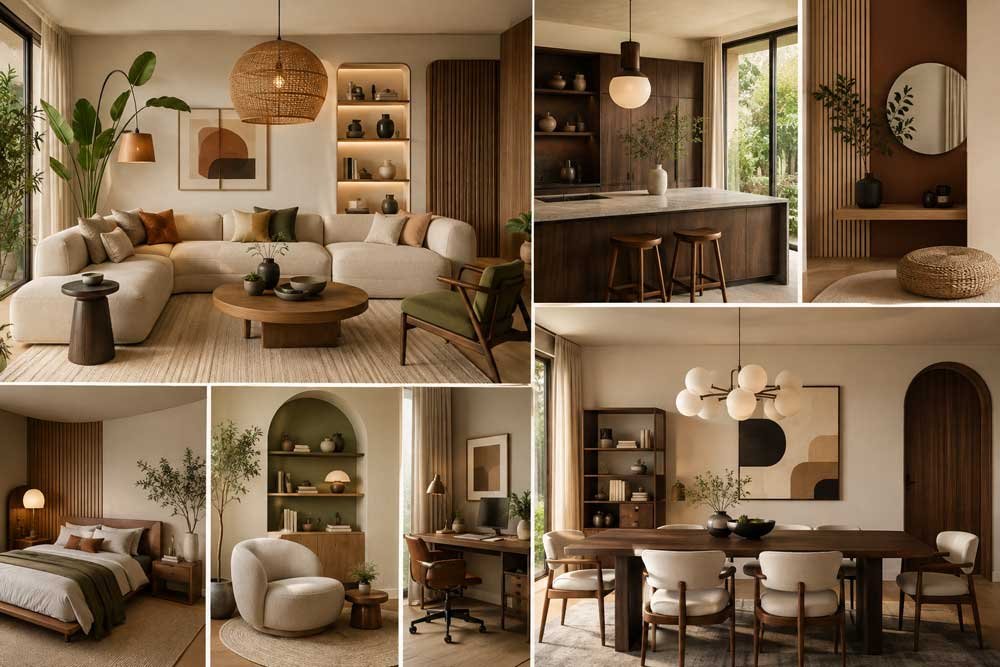
Interior design is changing quickly, but the biggest trends of 2026 are not simply about making a home look fashionable. They are about creating spaces that feel personal, comfortable, functional, and connected to the way people actually live.
This year, homeowners are moving away from overly coordinated interiors and choosing warmer colors, natural materials, layered textures, statement lighting, meaningful décor, and furniture that feels built to last. Biophilic design, Japandi interiors, dark wood, personalized spaces, and more expressive use of color are also shaping modern homes.
Whether you are decorating a new house, renovating an apartment, or simply looking for easy home decor ideas, these interior design trends 2026 can help you create a space that feels both contemporary and timeless.
1. Warm Earthy Colors Are Replacing Cool Neutrals
One of the most noticeable changes in home interior design is the move away from cold gray and overly pale neutral palettes.
Warm shades such as terracotta, camel, olive green, clay, warm beige, chocolate brown, and muted rust are becoming increasingly popular. Current trend reporting also points to warm earth tones as a major direction in home décor.
These colors can make a room feel more welcoming without making it look too dramatic.
You do not need to repaint your entire home to introduce this trend. Start with cushions, rugs, curtains, artwork, accent chairs, or smaller decorative pieces.
2. Biophilic Design Brings Nature Indoors
Biophilic design continues to be one of the strongest ideas in modern interiors.
The concept focuses on creating a stronger connection between people and nature through indoor plants, natural light, organic shapes, natural materials, and nature-inspired colors.
Large indoor plants, wooden furniture, stone surfaces, woven accessories, and plenty of natural light can instantly make a room feel calmer and more inviting.
For apartments and smaller homes, even a few strategically placed plants can make a significant difference.
3. Dark Wood Is Making a Comeback
For years, light oak and pale wood dominated modern interiors. In 2026, darker wood tones are returning with a more sophisticated look.
Walnut, espresso oak, and other rich wood finishes can add depth and warmth to living rooms, bedrooms, dining areas, and home offices. Designers are increasingly using dark wood alongside lighter stone, soft fabrics, and neutral walls to create contrast.
If you are not ready for dark cabinetry throughout your home, try a walnut coffee table, sideboard, dining table, bookshelf, or bed frame.
4. Japandi Interiors Continue to Grow
Japandi interior design combines Japanese simplicity with Scandinavian warmth.
The style is known for clean lines, natural materials, functional furniture, soft colors, and uncluttered spaces. It works particularly well for people who want a minimalist home without making it feel cold or empty.
Natural wood, linen fabrics, handmade ceramics, neutral colors, and simple furniture can help create the look.
The popularity of Japandi is also reflected in current trend data, which identifies it as a fast-growing interior design search topic.
5. Personalized Interiors Are More Important Than Perfect Interiors
One of the biggest shifts in interior design ideas is the move toward personality.
Instead of copying a perfectly styled room from social media, homeowners are incorporating objects that have personal meaning. Family photographs, artwork, travel souvenirs, inherited furniture, handmade pieces, and vintage finds can give a home a unique identity.
The result is a space that feels lived-in rather than staged.
Current design coverage similarly highlights a growing preference for personalized, lived-in interiors instead of overly curated spaces.
6. Statement Lighting Becomes a Design Feature
Lighting is no longer simply something functional.
Large pendant lights, sculptural chandeliers, decorative wall sconces, oversized lamps, and unusual fixtures can become focal points in a room.
For example, a simple dining room can look completely different with a statement pendant positioned above the dining table.
Layering is equally important. Combine ceiling lighting with floor lamps, table lamps, wall lights, and accent lighting to create different moods throughout the day.
7. Small Living Rooms Are Getting Bolder
If you have a small apartment, you do not have to make everything white and miniature.
Designers are increasingly challenging traditional small-room rules by using larger rugs, dramatic lighting, bold colors, and carefully selected furniture to create a stronger sense of scale.
A large rug can visually connect furniture pieces, while full-length curtains can draw the eye upward and make the room feel taller.
The key is not necessarily using smaller objects. It is creating visual continuity and avoiding unnecessary clutter.
8. Natural Materials Add Warmth
Natural materials are becoming increasingly important in modern interior design.
Wood, stone, linen, wool, rattan, cane, jute, ceramic, and handmade finishes can introduce texture and character into an otherwise simple room.
Instead of matching every material, try combining contrasting textures. A wooden coffee table with a soft wool rug and linen sofa, for example, can create a comfortable and layered appearance.
9. Curved Furniture Softens Modern Spaces
Straight lines have dominated contemporary furniture for years, but curves continue to influence modern interiors.
Rounded sofas, curved chairs, circular coffee tables, arched mirrors, and curved architectural details can make a space feel softer and more welcoming.
Curved furniture works particularly well in living rooms and bedrooms where comfort is a priority.
The trick is balance. A room does not need every piece of furniture to be curved. One or two rounded elements can provide enough contrast.
10. Statement Ceilings Are Getting More Attention
Walls and floors traditionally receive most of the design attention, but ceilings offer another opportunity to create visual interest.
A painted ceiling, textured finish, wallpaper, wooden beams, decorative molding, or statement lighting can transform an otherwise overlooked surface.
Design experts are increasingly encouraging homeowners to treat ceilings as an important design element rather than leaving them completely plain.
For a subtle approach, use a ceiling color that is only slightly different from the walls.
11. Vintage and Retro Details Are Returning
Another interesting direction in home decor trends is the return of vintage-inspired design.
Elements from the 1980s and 1990s are being reinterpreted rather than copied exactly. Floral patterns, geometric details, vintage furniture, decorative trim, terracotta, and colorful bathrooms are finding their way into contemporary interiors.
The best approach is to mix old and new.
A vintage chair can work beautifully beside a modern sofa. An antique mirror can become a focal point in a contemporary bathroom. This combination gives a home more character.
12. Comfortable Luxury Is Replacing Showy Luxury
Luxury interiors are becoming less about expensive-looking decoration and more about quality, comfort, and craftsmanship.
Think high-quality fabrics, natural stone, custom storage, comfortable seating, beautiful lighting, and carefully selected furniture.
This approach creates luxury interior design that feels sophisticated without becoming overly formal.
The growing interest in high-quality furniture and long-lasting home pieces also reflects a broader move toward buying fewer but better items.
13. Multifunctional Furniture Is Essential for Modern Homes
As homes become more flexible, furniture needs to perform multiple functions.
A storage ottoman can provide seating and hidden storage. A sofa bed can transform a living room into a guest room. A console can become a compact home office.
This is especially useful for apartments and smaller homes where every square foot matters.
When choosing furniture, consider how you actually use your space rather than buying pieces simply because they look attractive.
14. Home Offices Are Becoming More Comfortable
The home office has evolved from a temporary workspace into a more permanent part of residential design.
Comfortable chairs, proper lighting, built-in storage, acoustic treatments, plants, and attractive backgrounds can make working from home more enjoyable.
A successful home office should not feel like a corporate cubicle. Use artwork, natural materials, soft lighting, and personal accessories to create a productive but comfortable environment.
15. Thoughtful Design Is More Important Than Following Every Trend
Perhaps the most important interior design trend 2026 is choosing what genuinely works for you.
Not every trend belongs in every home. A beautiful interior should support your lifestyle, available space, budget, and personal taste.
Instead of redesigning your entire home whenever a new trend appears, choose a few elements that complement your existing interiors.
For example, you might keep your neutral sofa but introduce warm cushions, a vintage coffee table, natural wood accessories, and statement lighting. Small changes can make a familiar room feel completely refreshed.
How to Create a Timeless Interior in 2026
The best homes combine current trends with timeless design principles.
Start with a practical layout. Choose furniture that fits the scale of your room. Build a balanced color palette and introduce different textures. Prioritize good lighting and invest in pieces that you expect to keep for years.
Most importantly, allow your home to evolve.
A room does not have to be completed in one shopping trip. Adding artwork, books, plants, textiles, vintage pieces, and personal objects gradually can create a much richer result.
Final Thoughts
The most exciting interior design trends 2026 are focused on creating homes that feel warm, personal, functional, and authentic. From earthy colors and biophilic design to dark wood, Japandi influences, vintage details, statement lighting, and multifunctional furniture, there are plenty of ways to update your home without sacrificing comfort.
Rather than following every trend, choose the ideas that fit your lifestyle and combine them with elements you genuinely love.
After all, the best home decor ideas are not simply the ones that look good in photographs. They are the ones that make you feel at home.